










How is Cheqroom different from a traditional EAM or CMMS?
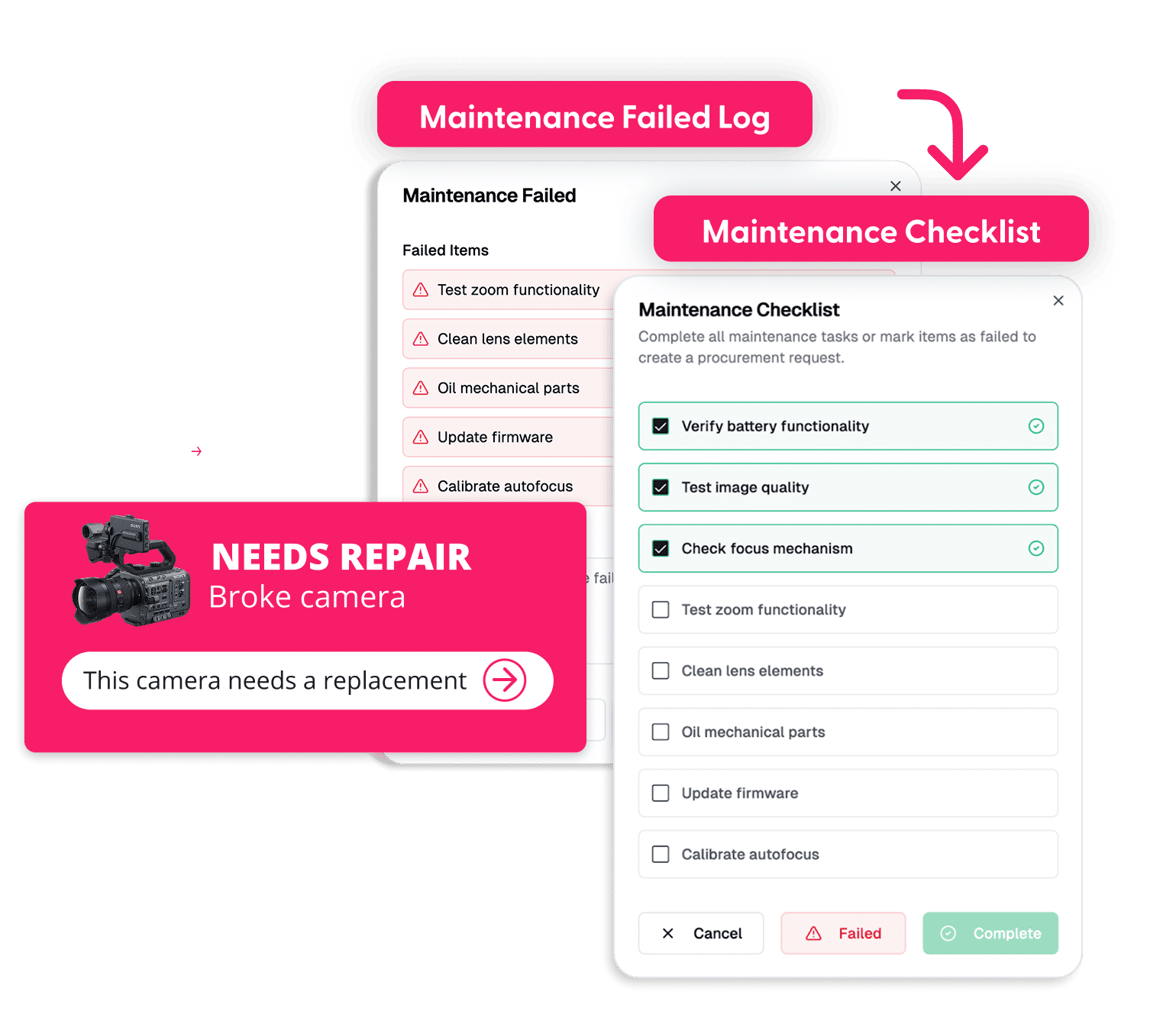
Cheqroom has all the core capabilities you'd expect: work orders, preventive maintenance scheduling, repair tracking, equipment condition flags, inspections, and complete audit trails. But it was built to solve a problem neither EAM nor CMMS was designed for.
EAM tools (like IBM Maximo) treat assets as balance-sheet entries — built for finance teams, depreciation schedules, and fixed infrastructure. They answer "what do we own?" They don't answer what happens operationally between acquisition and disposal.
Traditional CMMS platforms focus narrowly on the maintenance team — scheduling, work orders, and repair history. They answer "what's broken and what got fixed?" They live apart from the people reserving, checking out, and deploying equipment every day.
Cheqroom is the operational layer both are missing. One system for the full picture:
- Asset tracking — where every item is, who has it, what condition it's in
- Equipment sharing — reservations and checkouts without email chaos
- Maintenance — work orders, inspections, repairs, preventive service
- Lifecycle — procurement, custody, utilization history, disposal decisions
- Multi-site operations — consistent workflows across locations, departments, and permission tiers
- IT governance — SSO, role-based access controls, and ITSM integration built in
For enterprises managing equipment across multiple departments and locations, the question isn't just "what needs maintenance?" It's "what's available, who has it, is it ready to deploy, and what does leadership need to know?" That's the question a traditional EAM or CMMS was never designed to answer.
EAM tells you what you own. CMMS tells you what's broken. Cheqroom tells you what's available, who has it, whether it's ready, and what's coming next.