
Equipment inventory management

What is Equipment Inventory Management?

Equipment inventory management is the key to success if you want to manage your equipment inventory in an efficient way. It is hard to figure out what equipment you have and how much it's used if you're not actively keeping track of it. You'll need a strategy. That's where we introduce equipment inventory management.

What is Equipment Inventory Management?

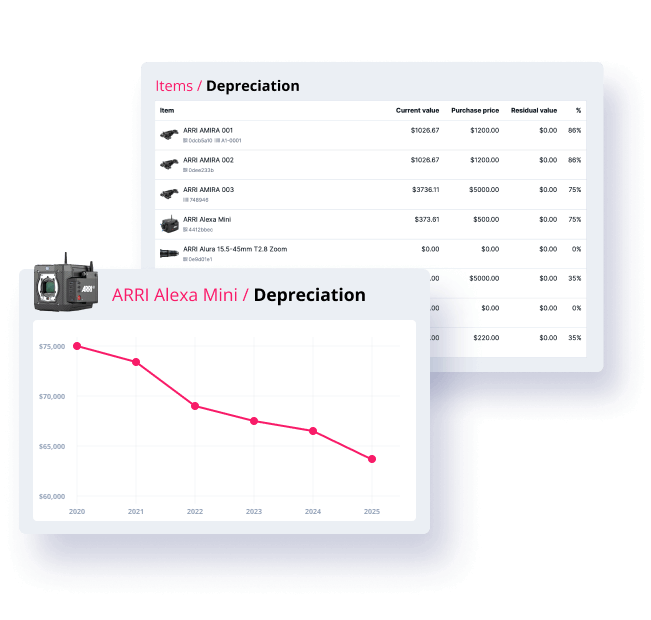
Equipment inventory management is the practice of tracking your inventory in detail. It's about knowing which equipment is in your inventory, how many times every equipment piece is used, how much it was worth when it was purchased, how much the equipment has depreciated, who last used the equipment, and more.

In essence, equipment inventory management is keeping tight control over every piece of equipment you have. It allows you to make informed decisions about when to replace equipment, when to plan equipment maintenance, and review equipment usage reports.

Best practices for managing your equipment inventory

Having all your information in one place saves you time that otherwise is lost to tracking down equipment. When you're deciding on new equipment purchases, it's easier to make decisions when you have a global view of your inventory. Therefore, it is useful to start an accurate equipment inventory list.

What are the advantages of using equipment inventory software?

When starting with an equipment inventory list, you'll go a long way. Eventually, when the company grows, this strategy will see its limits sooner or later. A digital system that can be accessed and updated by everyone on the go will result in more accuracy - Interested in exploring some features? Discover what Cheqroom has to offer.

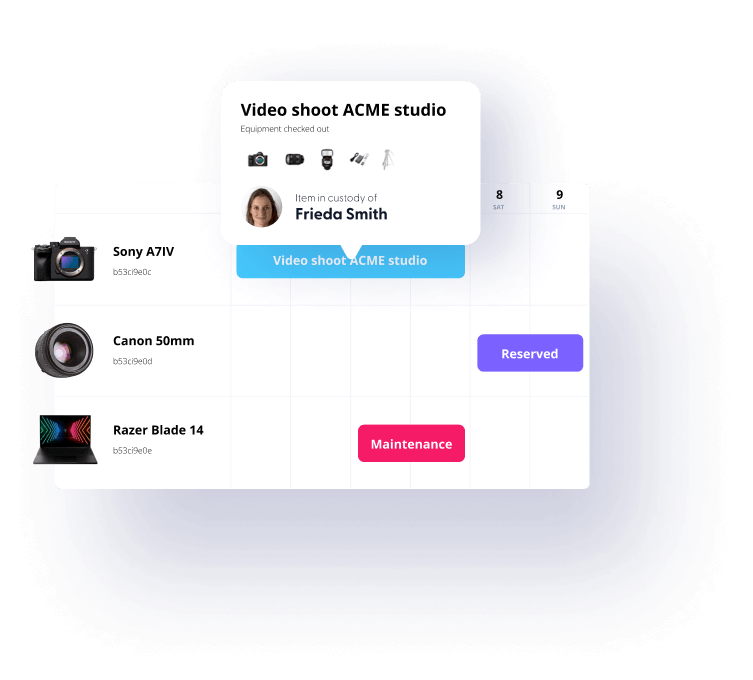
Feature - Equipment calendar

Enhanced Visibility and Accuracy

  • Real-Time Tracking: You gain immediate, accurate visibility into the location, status, and assignment of every piece of equipment, often using technologies like barcodes, QR codes, or RFID tags. This eliminates the time wasted searching for misplaced tools.
  • Accurate Data: By automating data entry and tracking, the software reduces human error associated with manual spreadsheets and physical checks, leading to a much more reliable inventory count.
  • Centralized Information: All critical data, including purchase date, cost, supplier info, warranty expiration, and maintenance history, is stored in one accessible location, improving data consistency and collaboration across departments.
  • Loss Prevention: Tracking locations and assignments helps in preventing theft or loss and improves accountability for assets.
Visual square 18

Cost Reduction and Financial Control

  • Optimal Stock Levels: The software provides insights to help you maintain optimal inventory levels, preventing expensive overstocking (excess carrying costs) and avoiding costly stockouts or project delays.
  • Reduced Unnecessary Purchases: Knowing exactly what equipment you have on hand and its utilization rate helps avoid purchasing or renting equipment that's already owned but simply misplaced or underused.
  • Depreciation and Valuation: It assists the finance department by accurately tracking the cost, value, and depreciation of assets over their lifecycle, which simplifies financial reporting and tax calculations.
  • Better Investment Decisions: Detailed reports and analytics provide the data needed to make informed decisions about whether to repair, replace, or retire an asset
Group 346

Operational Efficiency and Productivity

  • Automation: The software automates repetitive manual tasks like inventory audits, check-in/check-out processes, and generating maintenance tickets, freeing up staff for more critical work.
  • Data-Driven Planning: Analytics and reporting tools offer insights into asset utilization and performance trends, enabling better resource allocation, demand forecasting, and strategic planning.
  • Compliance: It facilitates adherence to regulatory requirements and industry standards by maintaining accurate, auditable records of inspections, certifications, and maintenance.

  • The most important features in an inventory management system are real-time asset tracking across multiple locations, digital check-outs with timestamped signatures, role-based permissions that control who can access specific assets, and mobile scanning support for barcode, QR, and RFID. Document management, kit and bundle tracking, automated overdue alerts, and utilization reporting from procurement to disposal round out the core capabilities. Ease of use matters as much as the feature set: a system your field teams, coordinators, and administrators will not actually adopt is not solving any problem. Integrations with the tools your team already uses, including calendars, communication platforms, and ticketing systems, keep asset data connected to the rest of your operations without manual handoffs. The real differentiator is whether those features work together in one platform: an asset flagged for repair should automatically become unavailable for booking, custody transfers should update instantly, and reporting should give finance and operations a shared view of asset value, usage, and cost without anyone pulling data manually.

  • Spreadsheets are static lists that require constant manual updates. Cheqroom is a dynamic platform that provides real-time visibility, smart scheduling to prevent double bookings, and detailed historical records, all from your phone or desktop. It’s built to bring order to chaos, not just count items.

  • Schedule regular maintenance and audits; Do prompt and thorough repairs, fix any issues quickly and thoroughly. Do cosmetic fixes- your equipment shouldn’t just work like new, it should look like new as well. Ensure you have the right access controls and permissions as well as a system to hold people accountable for using your equipment.

D CTA 2 - transparent logo

Feel in control of your equipment inventory

See how you can harness the power of Cheqroom today!