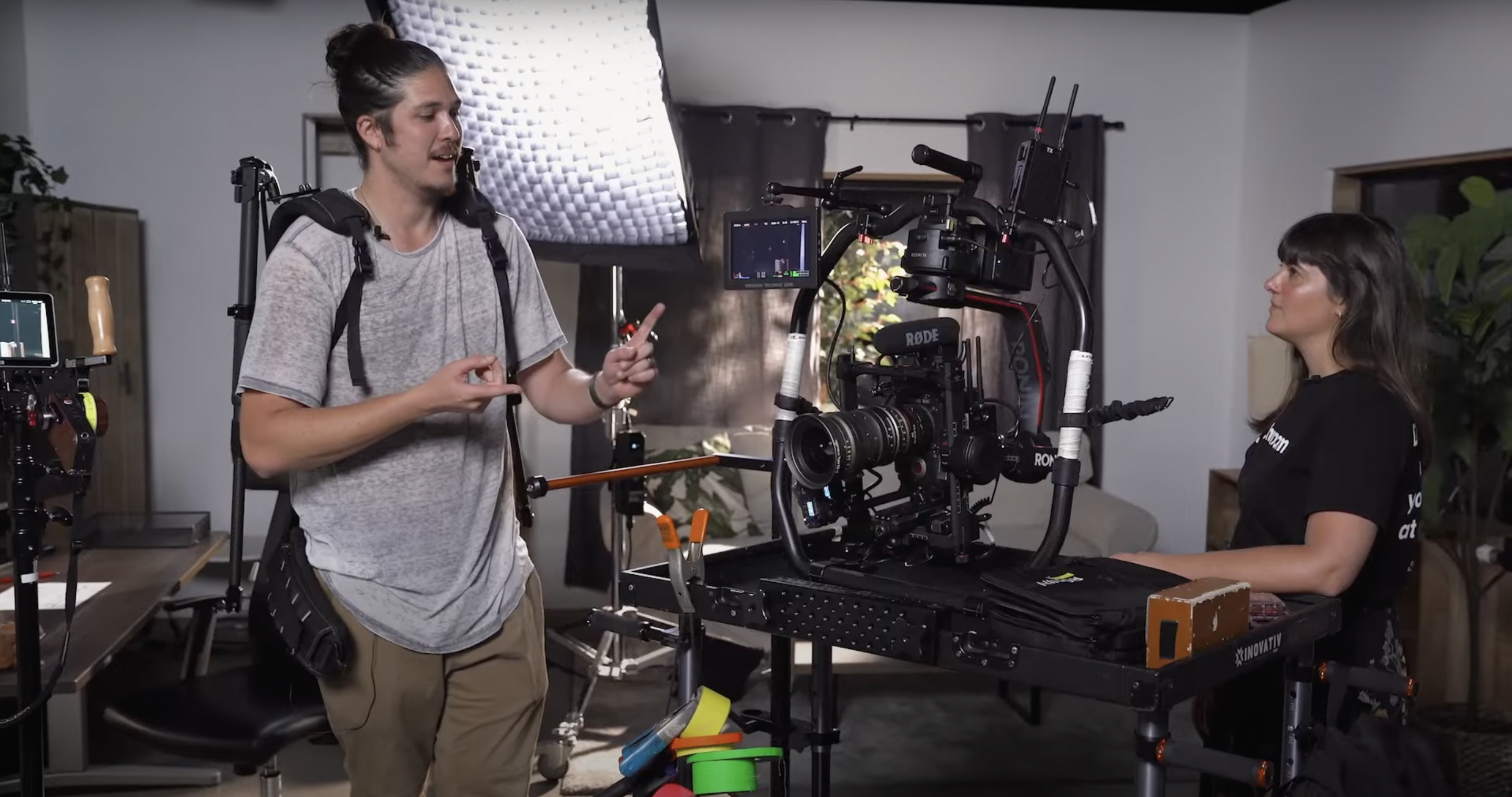
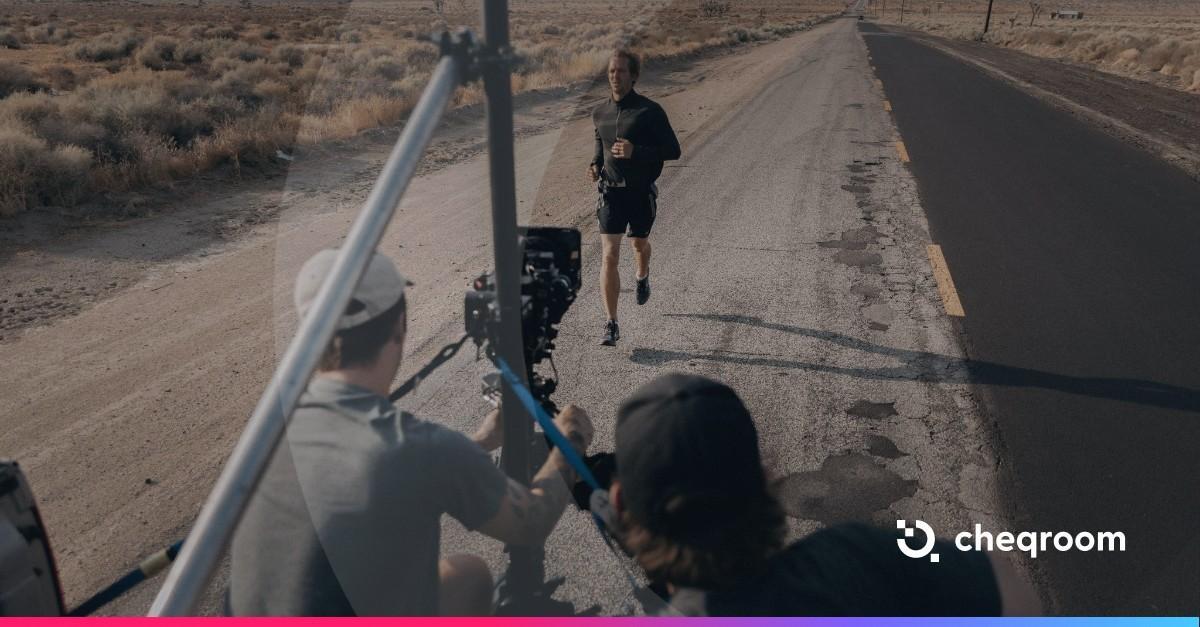
We headed to LA to ask creative agency Origin Point for their Hollywood insights. They used to be the in-house production team at RED so they know what they’re talking about… 👀
How Do You Keep a $50,000 Camera on a $200M Movie Set from Disappearing?
When you watch a blockbuster, you’re seeing years of work and millions of dollars captured by some truly incredible gear. The camera of choice for many of the world's top directors? Often, it's a RED camera.
But here's a secret no one talks about: owning a powerful camera like a RED is the easy part. The real challenge—the one that keeps production managers up at night—is ensuring that multi-million-dollar inventory is available, maintained, and accounted for, every single minute of every shoot day.
That's where strategic equipment management stops being a back-office chore and becomes a mission-critical part of filmmaking.
Why Do Filmmakers Choose RED Cameras Over the Competition?
RED Digital Cinema redefined the industry when they introduced affordable, high-resolution digital cinema. They gave filmmakers flexibility they never had before, but with that flexibility came a complex, modular ecosystem.
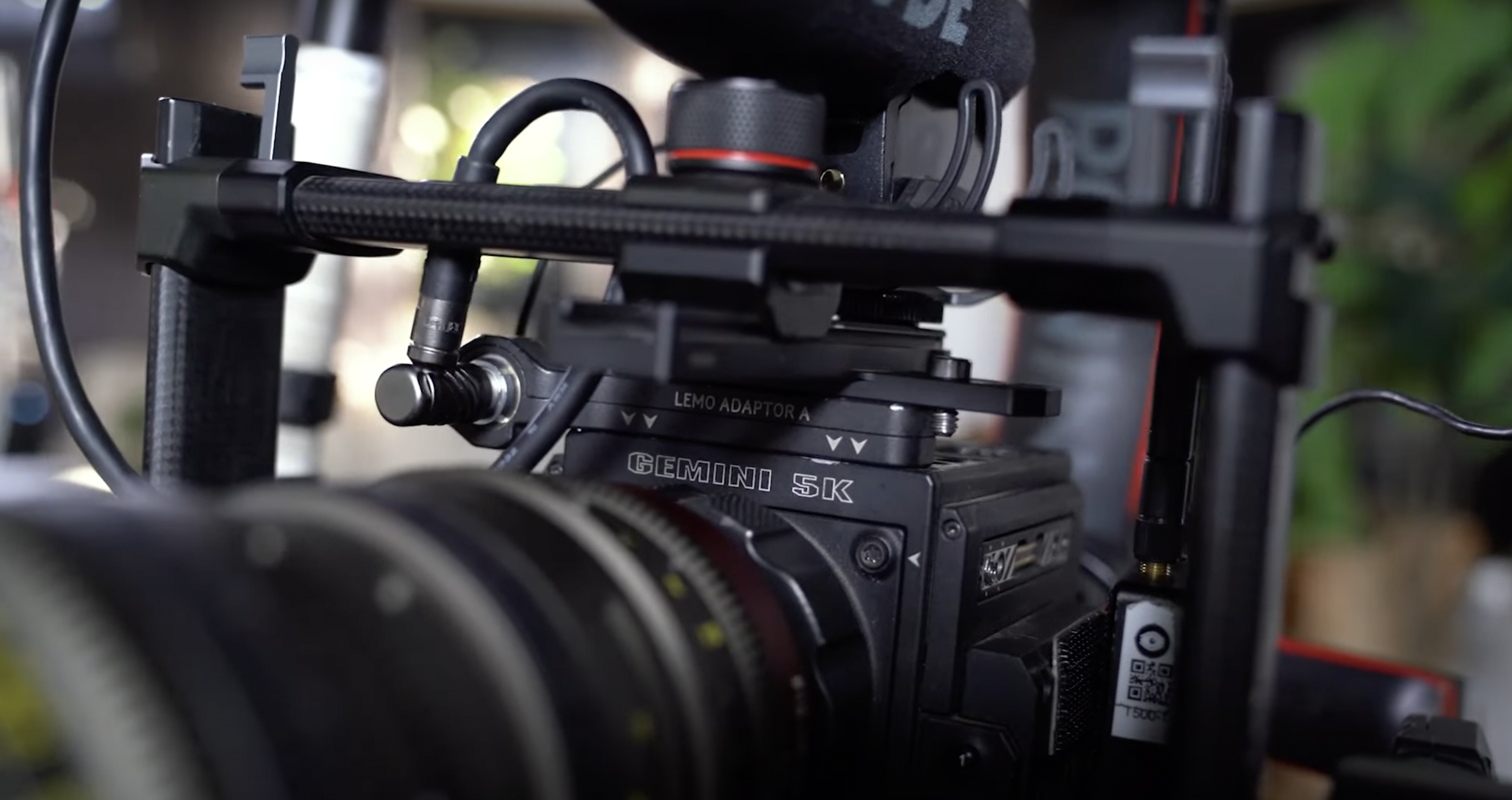
LA-based creative agency, Origin Point, points to three main reasons why RED cameras get the green light, often featuring models like the RED Gemini or the new V-Raptor series:
1. The Superb Cinematic Image Quality
This is the heart of the matter. RED cameras deliver a deeply detailed image thanks to their high resolution and sensor design.
Insane Resolution: Models like the RED Gemini shoot up to 5K resolution (5000 pixels), while top-tier cameras push into 8K. This level of detail isn't just for bragging rights; it allows for extreme cropping, VFX work, and reframing in post-production without losing quality.
Color Science Freedom: RED shoots in a proprietary REDCODE RAW format. Why is that important? Because it’s uncompressed, giving the colorist maximum latitude in post-production. It's like having a digital negative you can manipulate endlessly—the ultimate creative freedom.
With the RED Gemini, you will be able to expose for your skies as well as see into the shadows.
Clyde BesseyCreative Director at Origin Point
2. Unrivaled Dynamic Range (Especially in Low Light)
RED cameras shine when the sun goes down. A camera's dynamic range is its ability to capture detail in both the brightest highlights (the sky) and the darkest shadows simultaneously.
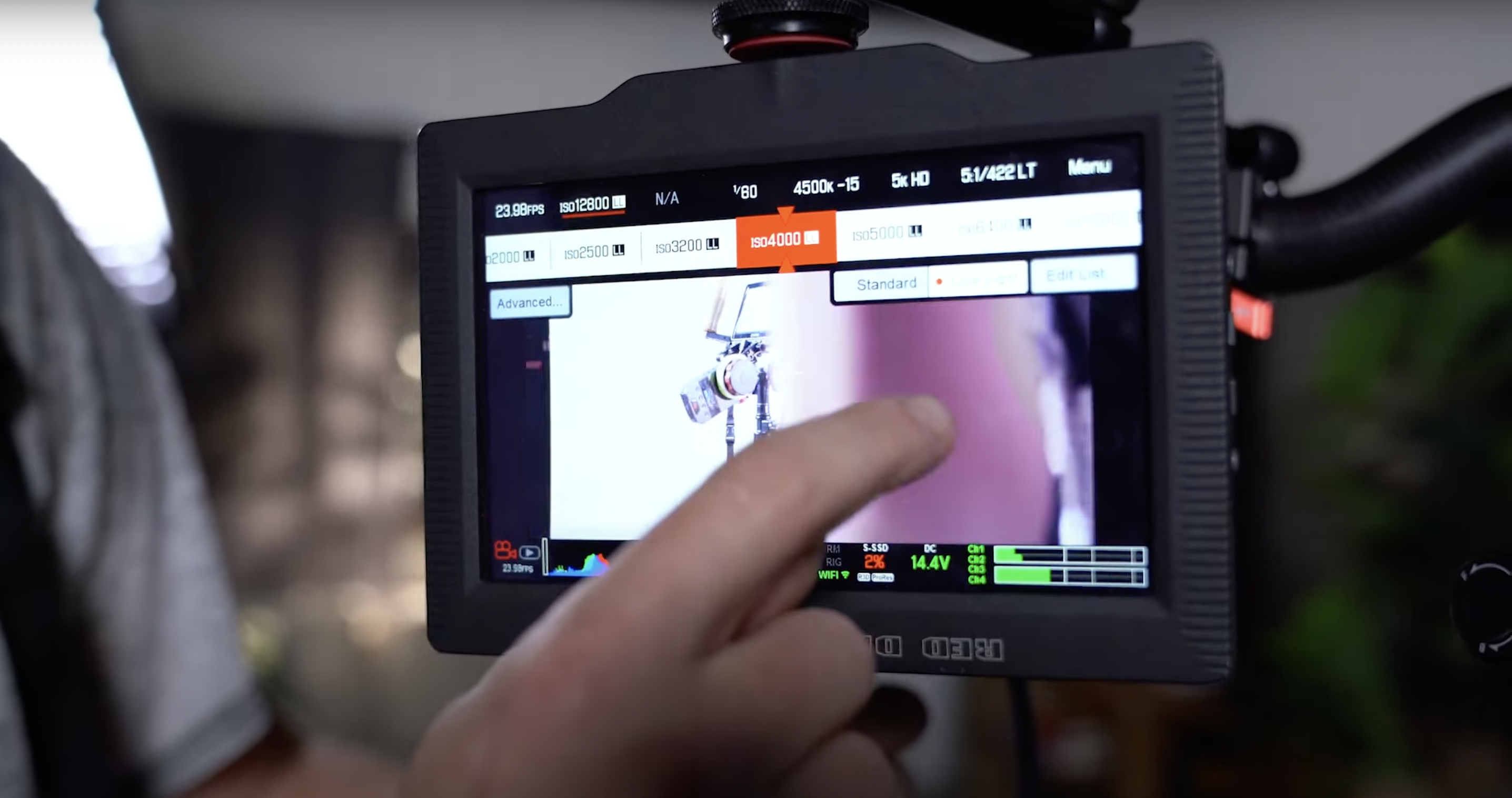
Shadow Detail: Sensors are flexible enough to capture detail across an extreme range. The Gemini, for instance, has a special 'low-light mode' that starts at 1600 ISO and can be pushed higher without introducing a ton of noise or grain.
No Compromises: This feature means filmmakers don't have to choose between a properly exposed subject and a moody background—they get both. Less lighting equipment is needed, which means faster setups, less crew, and ultimately, a more efficient shoot.
3. Modular Design and Usability
Filmmaking is about movement, and RED's design philosophy supports that.
Lightweight 'Brain': The core camera body—or 'brain'—is incredibly small. The RED Gemini brain weighs less than 5 lbs, making it perfect for drones, gimbals, or long handheld shots.
Modular Ecosystem: This is the game-changer. You don't buy "a camera;" you buy a system. You can swap out the lens mount, add specialized monitors, or attach different battery types. This modularity means the camera can adapt to any shooting environment, from a tight car interior to an 8K IMAX shot.
The Production Challenge: Why Equipment Management is the Real Star
Okay, so the RED camera is a technical marvel. But now imagine a production studio that owns twenty of these brains, plus:
50 interchangeable lenses.
300+ batteries, chargers, and power cables.
100 proprietary SSD mini-mags (data storage).
Countless custom cages, focus monitors, and support rigs.
If a camera operator grabs the wrong battery, or if the specific RF mount needed for the Komodo-X is accidentally left behind, the whole day stalls. When a minute on set costs tens of thousands of dollars, chaos is unaffordable.
The real win for pro production teams comes down to world-class equipment management.
How Smart Studios Master Their RED Gear
Effective gear management moves beyond spreadsheets and sticky notes. It integrates with the modular, fast-paced nature of digital production.
The Problem (Chaos)
Missing Gear: The specific RED Gemini is missing its correct power cable right before a shoot.
Unplanned Downtime: A camera goes down during a critical shoot because of a cracked sensor filter.
Inefficient Investment: The company keeps buying the same RED Scarlet-W packages without knowing which models are actually being used most.
The Solution (Equipment Management)
Real-Time Tracking: Every RED body, lens, and memory card is tagged and scanned using QR or barcode labels on check-out and check-in. The production manager knows exactly who has the gear, right now.
Proactive Maintenance: A system flags a camera for service after it hits a usage threshold (e.g., 500 hours of use) or after it returns from a tough location shoot (like a desert scene).
Utilization Report: Powerful reports show which high-value assets (like the RED V-Raptor 8K) are utilized 90% of the time, justifying maintenance, and which gear is collecting dust, justifying a sale or rental.
The truth is, Hollywood's obsession isn't just with the megapixel count of the newest sensor. Their success hinges on reliability. They buy the best camera they can, and then they use the best equipment management solution available to protect that investment and guarantee it performs every time.
You don't need another tool—just a smarter way to manage what you already have. If you’re managing complex, high-value assets like cinema cameras, lighting, and audio gear, a dedicated solution for your equipment managementisn't a luxury—it's the foundation of operational excellence.
Stop Chasing Gear, Start Making Movies.
Book a quick, personalized demo to see how simple, centralized equipment management can save your production crew hours and prevent costly asset loss.
Elke Swinnen is Cheqroom’s video reporter and event queen. Most of the time, you’ll find her out in the world visiting Cheqroom customers and shows like NAB and IBC. She is passionate about sharing the latest gear updates, film industry insights, and top gear management tips and tricks. Her favorite pieces of gear are the ARRI ALEXA 35 and Aputure MC Pro. She’s also a Content and Social Media Marketer at Cheqroom.
Why is equipment management particularly important for high-end cinema gear like RED cameras?
Equipment management is critical for high-end gear because these items are modular, extremely expensive, and constantly moving across different teams and locations. A single missing component (like a proprietary power adapter or SSD) can halt a $50,000 camera body, costing the production thousands of dollars per hour in delay. Proper equipment management minimizes asset loss, prevents unplanned downtime, and saves up to 80 hours per month for managers.
What is the main technical advantage of RED cameras that influences gear management?
The main technical advantage is the camera's high-resolution RAW capture (up to 8K) and modular design. This modularity means the inventory isn't one unit, but dozens of interchangeable, high-value accessories (lenses, mounts, filters). This exponentially increases the complexity of gear management compared to a single-piece camera system, making dedicated tracking software essential.
How does efficient equipment management prevent unplanned downtime?
Efficient equipment management prevents unplanned downtime through proactive maintenance scheduling. The system tracks usage hours and location history, automatically triggering maintenance flags. This means the camera is serviced before a failure occurs, ensuring reliability on set and extending the useful lifetime of the expensive equipment.