Unplanned downtime doesn't just slow operations — it exposes every gap in how equipment is managed. A consistent maintenance strategy improves performance, reduces unplanned downtime, and extends the life of your most critical equipment.
The shift modern teams need to make is simple: stop waiting for things to break. Proactive maintenance gives you control over your schedules, your asset data, and your operations, so disruptions stop being the norm and start being the exception. Every asset you own has value. A smart maintenance strategy makes sure it stays that way.
What is Asset Maintenance?
Asset maintenance is the process of inspecting, servicing, and repairing equipment to keep it reliable, available, and safe throughout its lifecycle. It includes scheduled maintenance, condition-based updates, calibration, warranty tracking, and repairs that ensure assets continue to perform as expected and remain compliant with operational and regulatory standards.
In practice, asset maintenance is not separate from daily operations. It is tied directly to how equipment is assigned, used, and returned — whether that equipment is fixed infrastructure, shared moveable gear, or managed spaces. Maintenance decisions depend on accurate records of usage, condition, and activity, which allows teams to service or recalibrate equipment at the right time rather than reacting after failure or missing a compliance window.
A structured approach connects maintenance with asset tracking. Teams manage inspections, warranty status, and service schedules alongside checkouts, usage, and status updates, ensuring that equipment is only available when it is ready and compliant to use. This keeps asset data aligned with real usage and supports consistent performance across operations.
Why Asset Maintenance is the Cornerstone of Operational Excellence
Asset maintenance supports operational stability by ensuring that equipment remains functional, available, and safe to use. When maintenance is consistent, teams can rely on equipment performance without interruption.
Asset maintenance drives excellence in several ways:
- Financial: Reduces total cost of ownership by minimizing emergency repairs and avoiding premature capital expenditures.
- Operational: Keeps operations running without interruption through scheduled and condition-based maintenance that prevents unexpected failures.
- Strategic: Creates a complete record of asset activity — inspection history, service logs, warranty status, and compliance documentation — that supports smarter capital planning, stronger audit readiness, and better decisions around repair versus replacement.
These factors make asset maintenance a foundational part of operations, ensuring that equipment remains dependable and aligned with daily work requirements.
The Core Types of Asset Maintenance Strategies
We know that one size doesn't fit all. The best maintenance strategy depends on how critical the asset is, how it usually fails, and the cost of maintaining it versus the cost of failure.
Key Benefits of a Structured Asset Maintenance Program
A structured asset maintenance program improves how equipment is managed by aligning maintenance with actual usage and condition. Instead of reacting to failures, teams operate with a consistent process that keeps assets reliable and available.
The key benefits include:
- Reduced unplanned downtime: Scheduled and condition-based maintenance prevent unexpected failures, which keeps operations running without interruption.
- Improved asset reliability: Equipment performs consistently when maintenance is tracked and completed on time, which reduces variability in daily operations.
- Extended asset lifespan: Regular servicing reduces wear and delays the need for replacement, which helps maximize the value of each asset.
- Better cost control: Planned maintenance reduces emergency repairs and supports more predictable budgeting for repairs and replacements.
- Stronger operational visibility: Maintenance activity is recorded and tracked, which allows teams to understand asset performance and make informed decisions.
These benefits ensure that maintenance supports operational consistency, cost efficiency, and long-term asset performance.
Top 7 Best Practices for Modern Asset Maintenance
A structured asset maintenance program depends on clear processes, consistent tracking, and accurate data. Teams that manage maintenance effectively treat it as part of daily operations, not a separate activity. These best practices build that foundation:
- Proper Inventory and Classification: Maintenance starts with knowing exactly what you own. Build a complete asset inventory and classify equipment by criticality so high-impact assets get the attention they need and lower-risk items don't consume unnecessary resources.
- Comprehensive Lifecycle Tracking: Track assets from acquisition to disposal, capturing usage patterns, service history, and condition changes over time. This data allows maintenance to be scheduled based on how equipment is actually used rather than fixed assumptions, which improves reliability and reduces unnecessary work.
- Establish and Document Compliance Rules: Safety and regulatory requirements need to be linked directly to the assets they apply to, not stored separately. Attaching compliance documentation to asset records ensures teams follow correct procedures during inspections and makes audits significantly easier to manage.
- Define Stock Thresholds for Spare Parts: Most maintenance delays come from missing parts, not the repair itself. Setting minimum stock levels for critical components and tracking spare parts alongside assets ensures repairs can be completed without extended downtime or supply gaps.
- Run Regular Asset Audits: Physical audits verify that equipment is present, correctly recorded, and in the expected condition. Regular checks eliminate "ghost assets", surface outdated records, and ensure that maintenance decisions are based on accurate, up-to-date information.
- Track Critical Maintenance Metrics: Measuring performance is what separates a maintenance program from a maintenance habit. Metrics like Mean Time Between Failures (MTBF) and Mean Time To Repair (MTTR) help teams identify patterns, adjust schedules, and demonstrate whether the program is actually improving over time.
- Leverage a Centralized Technology Platform: Manual tracking fragments data and creates inconsistencies across teams and locations. A centralized maintenance management platform connects maintenance schedules, asset records, work orders, and usage history in one place — giving teams managing assets the scheduling, tracking, and visibility their maintenance program depends on.
Overcoming Common Challenges in Asset Maintenance
Organizations struggle with tracking assets across locations, prioritizing tasks, managing costs, and ensuring compliance.
The solution is simple: centralization and automation of maintenance workflows into one system.
A platform like Cheqroom provides a single source of truth for asset location, status, and maintenance history, which improves visibility and reduces gaps in tracking. Automated scheduling and real-time updates ensure that maintenance tasks are completed on time, helping teams shift from reactive fixes to a more consistent and proactive maintenance approach.
The Strategic Role of Asset Maintenance in Operations
Asset maintenance is not a cost center; it is how modern teams protect operational performance. A structured approach reduces unplanned downtime, extends asset lifespan, and turns maintenance from a reactive burden into a measurable advantage. The teams that get this right don't just fix equipment faster. They stop needing to.

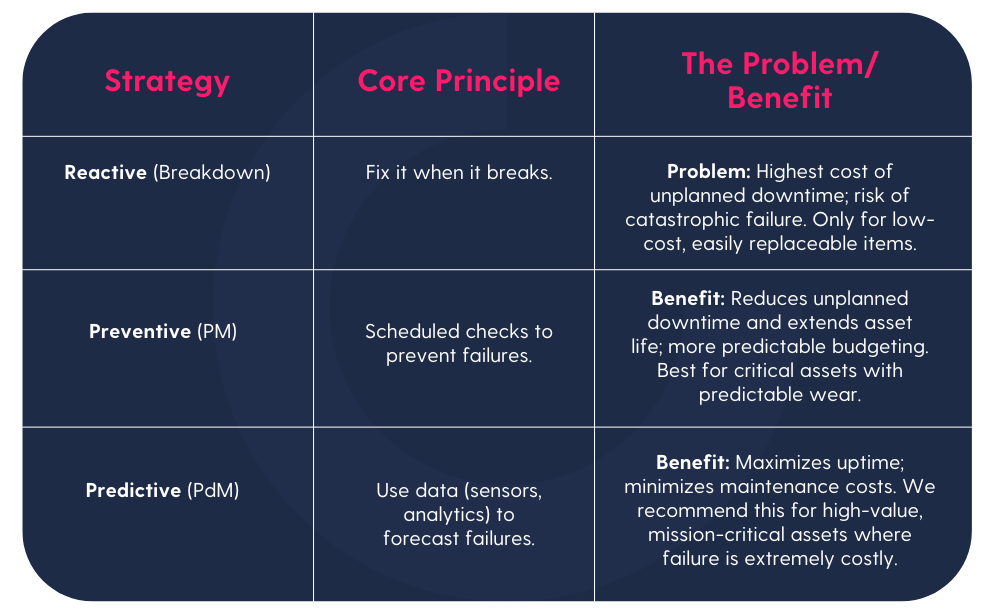 Teams often combine these strategies to balance cost, reliability, and performance across different types of equipment.