How to Calculate Your Equipment's ROI
Every piece of equipment your business owns—from computers and tools to vehicles and production gear—is an investment. Like any investment, you need to understand if it's paying off. Calculating and demonstrating your equipment's Return on Investment (ROI) isn't just a financial exercise; it's crucial for smart budgeting, efficient resource allocation, and justifying future purchases.
Tracking and showcasing your equipment's Return on Investment (ROI) is key. But how do you measure such an important metric and, more importantly, communicate it effectively? This guide breaks it down step-by-step, helping you gain a clearer picture of your assets’ performance.
What Exactly Is Equipment ROI?
At its core, equipment ROI measures the value your assets deliver compared to their cost. It provides insight into whether the equipment is saving money, generating revenue, or leading to inefficiencies.
While the formula varies by equipment type and use case, the basic principle asks two crucial questions:
- Are the benefits (e.g., cost savings, efficiency, or revenue generated) outperforming the costs (e.g., purchase, maintenance, and downtime)?
- Can this performance justify retaining or replacing the equipment?
By keeping these considerations in mind, you’ll gain valuable insights into your assets’ profitability and make more informed decisions for your business.
Step 1: Gather the Essential Data
To understand your ROI, you first need accurate data. Start by asking these critical questions:
1. What equipment do you have, and what did it cost?
Start by creating a complete inventory of all your assets. Note each item's purchase price as your baseline cost. If you’re working with groupings (e.g., 50 office laptops), calculate an average cost per unit.
How to calculate average cost: (Total Cost of Equipment) ÷ (Number of Items).
2. Track replacement costs
What are your annual costs for replacing lost or broken items? These ongoing expenses directly impact your ROI. By maintaining detailed replacement records, you can identify patterns over time. Track these costs consistently—whether quarterly or annually—to get an accurate picture.
3. What percentage of your equipment is idle (not in use)?
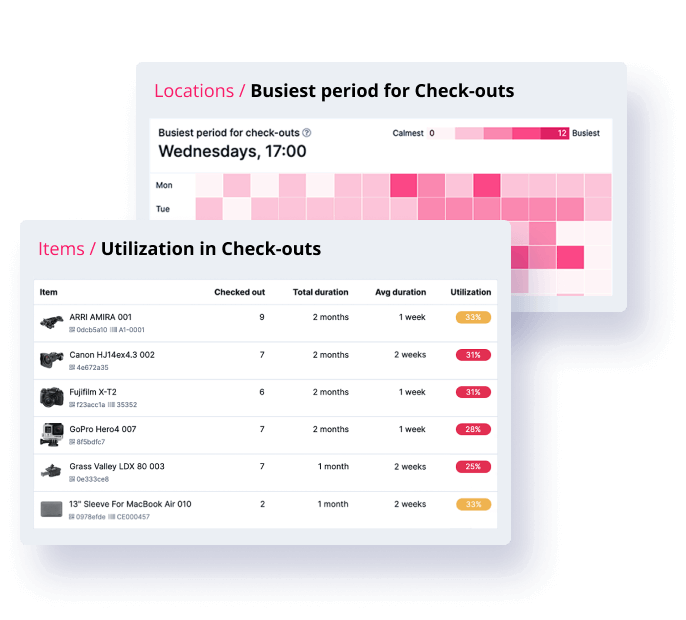
Unused equipment represents a sunk cost—capital tied up without generating value. Monitor this by tracking items that remain consistently unchecked or unused. High idle rates often indicate over-purchasing or poor allocation. Calculate the percentage of unused assets across your inventory.
4. Downtime and repair costs
Determine the frequency and cost of equipment downtime and subsequent repairs. Add any associated labor costs, such as technicians' time, to get a full picture.
5. How much time do teams spend searching for equipment?
Did you know time spent searching for lost or misplaced equipment can snowball into hidden costs? Estimate how many hours are lost each month across your team and calculate the cost using the staff’s average hourly wages.
Example:
If staff spend 5 hours a week at $30/hour searching for equipment, that’s $7,800 per year lost.
Tracking this data creates a clear picture of where your equipment is performing, what’s underused, and where inefficiencies are costing your business.
Step 2: Calculate Equipment ROI (ps... you can use Cheqroom calculator too 🧮)
Now that you’ve got the data, it’s time to calculate your equipment ROI. Start with this basic formula:
ROI (%) = [(Net Profit from Equipment) ÷ (Total Investment)] × 100
Here’s how to include key figures in your equation:
- Net profit = Revenue generated or cost savings from the equipment.
- Investment = Purchase costs, maintenance expenses, replacement fees, and downtime costs.
Consider both direct and indirect benefits
- Direct benefits: Savings from reduced replacement expenses, higher utilization rates, or streamlined maintenance schedules.
- Indirect benefits: Improvements like faster project completion timelines due to reduced search times, or better client satisfaction from consistent equipment availability.
Example scenario using ROI
You analyze 200 pieces of equipment and uncover the following costs and savings:
- Annual replacement cost = $10,000
- Annual cost of lost staff time searching for equipment = $8,000
- Savings from improved organization = $6,000
Calculation:
Net Profit = Savings ($6,000) - Costs ($10,000 + $8,000) = -$12,000
ROI Formula = [(-$12,000) ÷ ($20,000)] × 100 = -60% ROI
This figure underscores the need for action to improve your ROI and reduce inefficiencies.
Step 3: Analyze Your Findings
With this data, you can start analyzing your equipment's performance and identifying areas impacting ROI:
- Calculate Direct Costs: Sum up purchase costs, replacement costs, maintenance expenses, and the cost of time spent searching.
- Identify Savings & Efficiencies: Where are you saving money or being efficient? Lower replacement rates, high utilization of key assets, and minimal search time all contribute positively.
- Pinpoint Waste: High replacement costs, significant idle inventory, and substantial time lost searching directly reduce your ROI.
Step 4: Implement Strategies to Boost ROI
Data analysis means nothing without action. Here's how to turn your findings into improvements:
- Address Idle Equipment: Redistribute underused assets to teams that need them or sell them to free up capital.
- Reduce Loss & Damage: Strengthen check-in/check-out procedures, upgrade storage systems, and implement tracking tools (like asset tags or software) to maintain visibility.
- Minimize Search Time: Create logical storage systems and implement asset management software to track equipment locations in real-time.
- Optimize Maintenance: Compare repair costs with downtime expenses to determine if preventive maintenance offers better value than reactive repairs.
Example Scenario: Consider an analysis of 250 pieces of equipment that shows: • $5,000 in annual replacement costs from loss and damage • $7,500 in annual staff time spent searching for gear • 15% of equipment sitting idle (representing $X in tied-up capital)
By addressing just the replacement and search time costs, you could achieve $12,500 in annual savings. Tackling idle assets would add even more value!
Step 5: How to Present Your Equipment ROI ("Show It Off")
Now, communicate the value of your equipment and your optimization efforts:
- Focus on Tangible Benefits: Highlight cost savings achieved (e.g., "Reduced replacement costs by 30%"), efficiency gains (e.g., "Cut equipment search time by 10 hours per week"), and improved utilization rates.
- Use Simple Visuals: Compare "before" and "after" scenarios using charts or tables to show the impact of improvements.
- Tell the Story: Explain how changes (like better tracking or maintenance) led to the improved ROI figures. Connect equipment performance directly to business goals like project completion speed or budget adherence. Focus on solutions and outcomes by highlighting concrete actions and their benefits:
- Example: “By implementing a better tracking system, we cut search times by 8 hours weekly, saving $12,000 annually."
Remember: Clear communication builds support for equipment changes and new investments.
Step 6: Make ROI Tracking Continuous
Understanding and improving your equipment ROI is an ongoing process. Regularly review your data, monitor the effectiveness of your strategies, and seek new ways to optimize asset management. This diligence ensures your equipment truly works for your business—justifying its cost and boosting your bottom line.
How Cheqroom Simplifies Tracking Your Equipment ROI
Cheqroom's asset management platform simplifies tracking and improving your equipment's ROI.
Here's how Cheqroom can help:
- Real-time asset tracking: Keep track of who has your equipment and its current status, eliminating time wasted searching.
- Reduce replacement & loss rates: Monitor checkouts and idle inventory through barcode scanning and centralized visibility.
- Maintenance management: Automate maintenance schedules and reduce downtime by up to 40%.
- Data-driven insights: Create visual reports that clearly demonstrate ROI to stakeholders.
- Intuitive mobile app: Access essential asset information anywhere, anytime.

Start optimizing your equipment ROI today.
With Cheqroom, you'll save time, cut costs, and make smarter decisions—all while extending equipment lifespan by up to 35%. The platform reveals hidden inefficiencies and delivers actionable insights in real time.
More blog articles