Importance of Equipment Checkout Workflows for Enterprise Teams
Managing equipment at an enterprise level requires more than just a storage room and a sign-out sheet.
As organizations scale across multiple regions, manual systems like spreadsheets quickly crumble under the weight of thousands of assets.
Implementing professional equipment checkout workflows ensures that every item is tracked, maintained, and available for the teams that need them most. Large-scale operations demand a centralized system that offers real-time visibility into who has what and where it is located.
These automated workflows eliminate the guesswork, replacing chaotic manual logs with a reliable digital “chain of custody” for every asset. In this guide, we will explore how to build a scalable checkout system that maintains control while empowering your workforce.
What Are Equipment Checkout Workflows?
Equipment checkout workflows are a series of standardized steps that manage an asset from the moment it is reserved until it is safely returned. It replaces informal requests with a structured digital process that ensures every transaction is recorded and every user is held accountable.
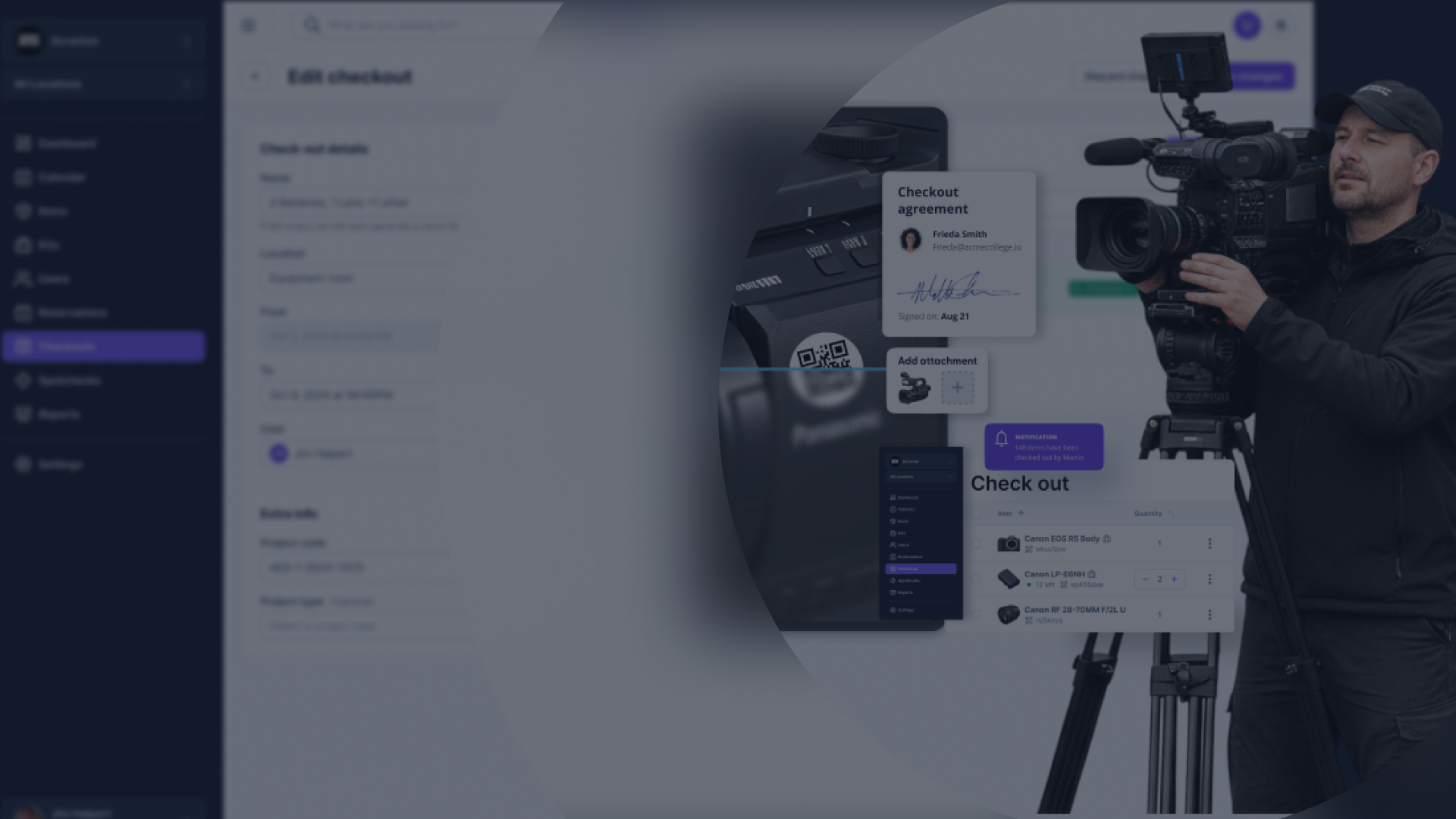
This system allows organizations to transition from reactive "gear hunting" to proactive resource management. Advanced platforms like Cheqroom optimize these equipment checkout workflows by allowing teams to:
- Schedule future reservations to prevent double-bookings
- Verify physical custody through mobile QR code scanning
- Flag equipment for maintenance immediately in the field or upon return
- Automate return reminders or overdue alerts for users
- Analyze usage data to inform future purchasing decisions
While the core technology remains the same, the way these workflows are implemented varies across industries.
For instance, a corporate IT department might prioritize long-term assignments and security audits, while a fast-paced production facility focuses on rapid turnarounds and kit-based logic.

Why Do Enterprise Teams Need Structured Equipment Checkout Workflows?
Enterprise teams need structured equipment checkout workflows to eliminate the high costs of lost gear and operational downtime. At scale, relying on memory or disorganized spreadsheets leads to “ghost assets”—they exist on paper but cannot be found in reality.
Managing thousands of items across different departments requires a level of accountability that manual logs cannot provide. A formal workflow ensures that every hand-off is documented, protecting the company’s investment and ensuring project readiness.
Without a digital chain of custody, it becomes impossible to identify who was last responsible for a damaged or missing piece of equipment. Structured workflows automate this oversight, allowing administrators to maintain control over high-value inventory without manual policing.
A centralized asset checkout software also prevents the scenario where gear sits idle in one office while another branch pays for an expensive rental. Global visibility allows managers to redistribute resources effectively and make procurement decisions based on actual utilization data.
What Are the Pillars of a Scalable Enterprise Equipment Checkout System?
A scalable enterprise system must balance rigid administrative control with the speed required by global teams. Without these pillars, the workflow will eventually break under the pressure of too many users or fragmented data.
The foundation of any large-scale operation rests on these core structural elements:
- Centralized Cloud Database: All asset data must live in a single source of truth accessible from any location. This eliminates information silos and ensures that a manager in London can see the same availability as a team in New York.
- Granular User Permissions: Large organizations need the ability to restrict access by department or skill level. This ensures that expensive or specialized gear is reserved for authorized users, maintaining safety and security.
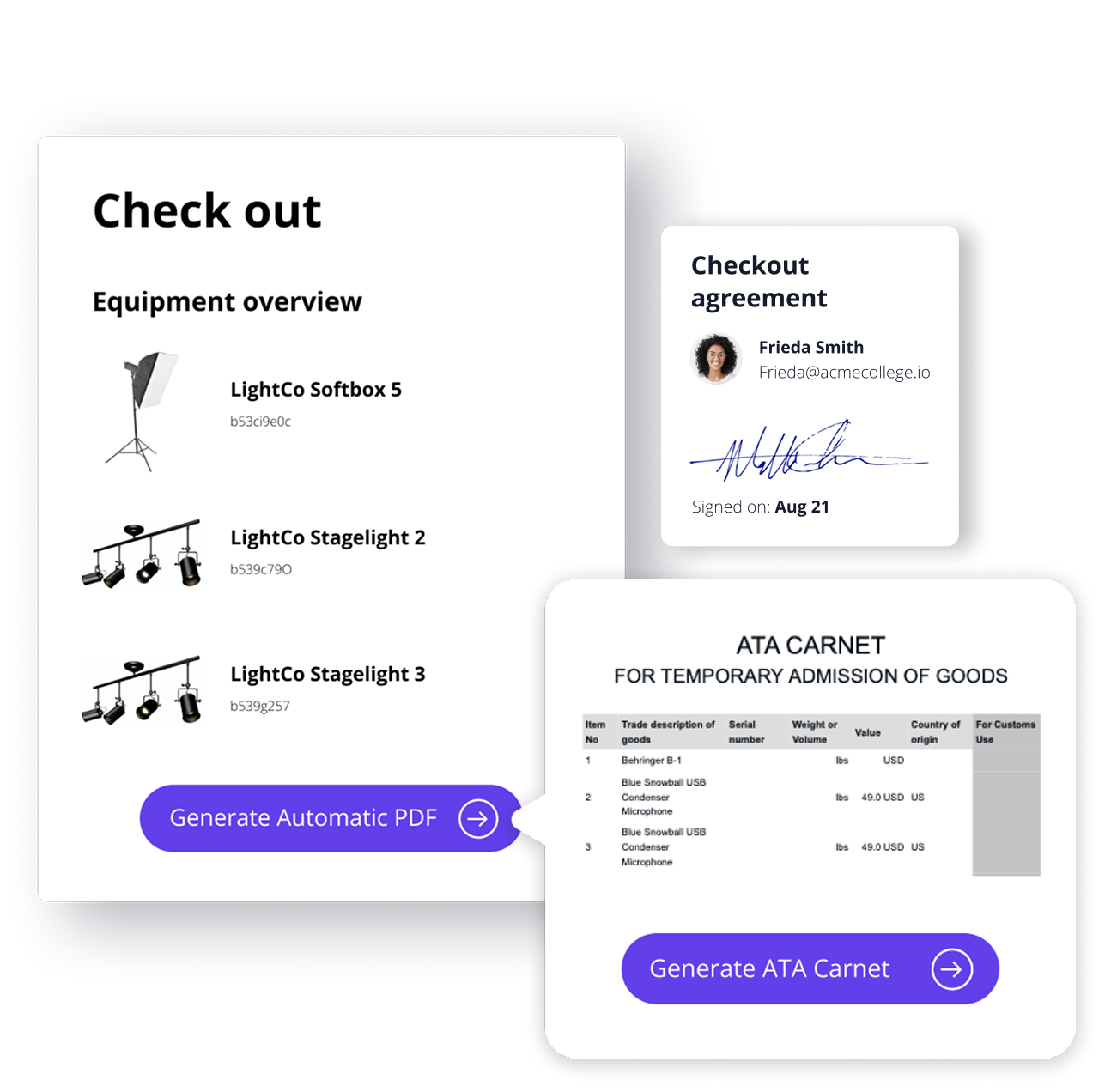
- Automated Audit Trails: Every action—from the initial reservation to the final return—must generate a permanent digital record. Transparency creates total accountability and simplifies meeting internal or external compliance audits.
- Seamless Software Integrations: An enterprise system should connect with your existing tech stack, such as SSO for security or Slack for notifications. The connectivity reduces friction and ensures the equipment workflow is a natural part of the employee's day.
How Does Automation & Equipment Checkout Workflows Eliminate Manual Errors in Large Organizations?
Automation removes the human element from repetitive data entry, which is where most inventory discrepancies begin. In a large organization, a single typo in an asset ID or a forgotten return entry can snowball into a major auditing nightmare.
Automated equipment checkout workflows replace manual tracking with digital triggers that ensure data remains accurate without constant oversight. With this, enterprises can eliminate the most common logistical bottlenecks:
- Barcode, QR or RFID Scanning: Using a mobile device to scan assets ensures the correct item is logged every time.
- Real-Time Status Updates: The moment an item is scanned, its status changes globally across the entire organization, preventing double-booking.
- Automated Return Reminders: Systems automatically notify users when gear is due back, reducing the need for managers to send manual emails.
- Maintenance Alerts: Automation can trigger a service workflow based on the number of checkouts or total hours of use. This ensures that gear is serviced on a predictable schedule rather than waiting for it to fail during a project.
These automated steps transform equipment management from a reactive task into a streamlined, self-sustaining process. This way, your team can focus on high-level operations instead of chasing down missing cables.
Why Is Cheqroom the Standard for Enterprise Equipment Management?
Cheqroom is the enterprise standard because it scales alongside your organization without sacrificing user experience. While legacy systems feel like rigid databases, our platform focuses on a mobile-friendly design that employees actually enjoy using.
Our platform provides the granular control needed to manage diverse teams across multiple global locations. You can set specific permissions so only certified technicians can access high-value assets, while keeping general supplies available for everyone.
Modern organizations require a dynamic system that moves at the speed of their business. Transitioning to a digital workflow creates a culture of accountability that extends across every department and geographic location.
The move toward an automated, scalable checkout system is an investment in your organization's long-term operational excellence. When your equipment management is seamless, your teams can focus on innovation and growth rather than logistical hurdles.

Ready to see how Cheqroom can scale with your organization?
Book an enterprise demo today to see our unlimited asset tracking and pricing structure.

Claire Strom | Program Marketing Lead
As the program marketing lead, she's the one who keeps Cheqroom's vision and our customers' needs in sync. She loves bringing new features to life and telling the world about the magic of how Cheqroom keeps work in motion.
Whether she is behind the scenes crafting a new strategy or in front of the camera sharing our customers' stories, her mission is to turn equipment operations into a superpower, one story at a time.
More blog articles