How Much Does Asset Tracking Cost?
In today's fast-paced business world, knowing where your assets are, who has them, and their current status isn't just a convenience, it’s a necessity. From high-end cameras and IT hardware to specialized tools and vehicles, every asset represents a significant investment. Losing track of even one can lead to costly delays, unplanned replacements, and a frustrating drain on resources.
But, like any smart business decision, the query immediately arises: "How much does asset tracking cost?"
To get the real answer, we have to look beyond the software subscription and look at the most expensive part of your business: your people. At Cheqroom, we believe in radical transparency. This guide breaks down the literal costs of software and hardware, the "hidden" cost of the people managing it, and the high price of the projects you’re sacrificing by sticking with a "free" spreadsheet.
1. The Hard Costs: Software & Hardware
Every modern asset tracking system has two physical pillars: the "brain" (software) and the "eyes" (hardware).
Software Costs (SaaS)
Most contemporary solutions, including Cheqroom, operate on a Software-as-a-Service (SaaS) model.
- Subscription Models: You pay a recurring fee (monthly or annually). This avoids hefty upfront IT infrastructure costs and includes automatic updates, cloud security, and customer support.
- Scalability: SaaS providers often offer tiered pricing based on asset count or feature sets. Cheqroom, for instance, focuses on providing comprehensive functionality regardless of user count, making it predictable as your team grows.
Hardware Costs: Identifying Your Assets
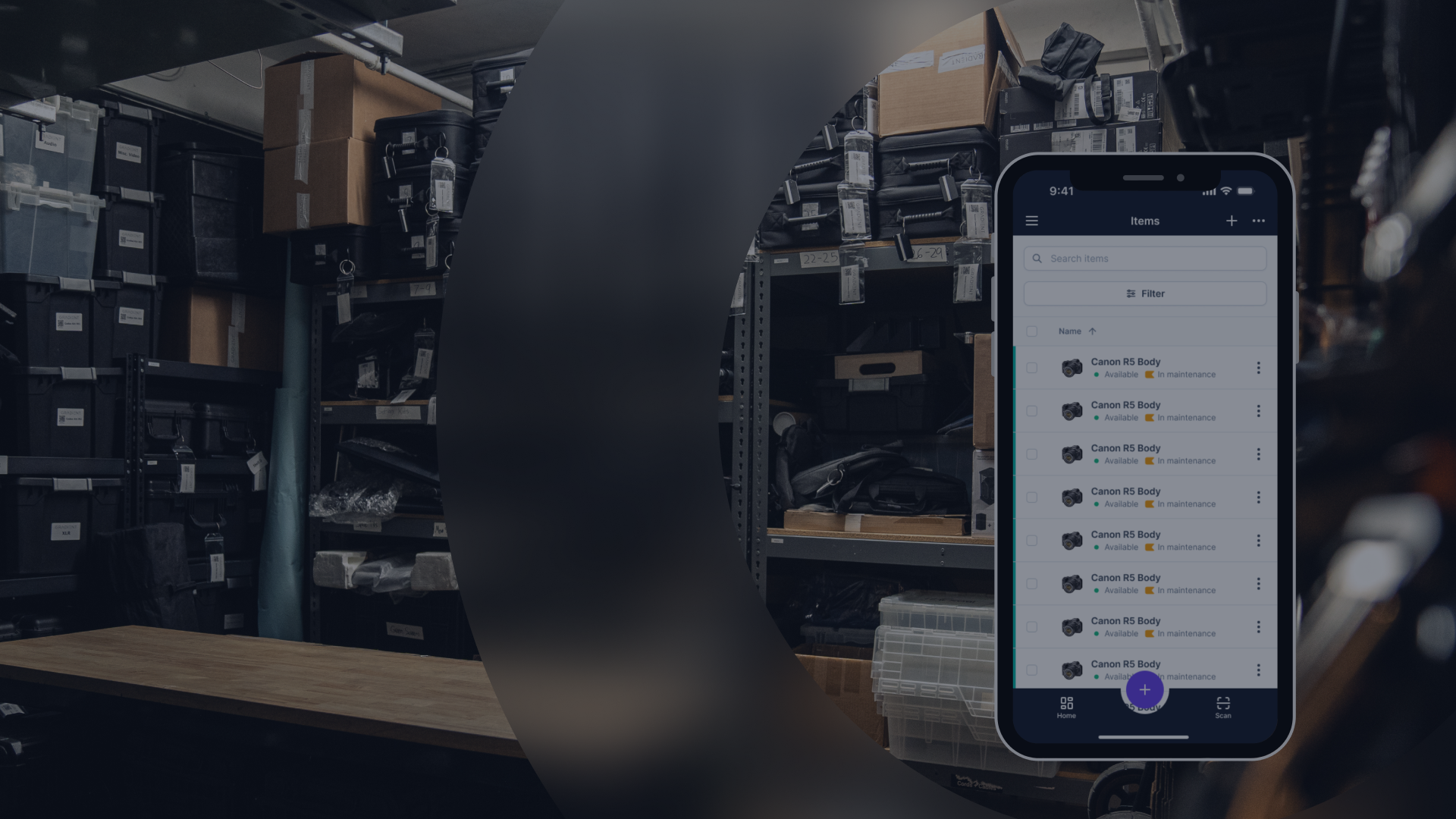
- Barcodes and QR Codes: This is the most cost-effective method. While dedicated handheld scanners can cost $300–$1,000 each, Cheqroom allows you to use your existing smartphone as a scanner. This effectively drops your hardware investment to the price of a few durable stickers.
- RFID and GPS: For "hands-off" tracking or real-time location for vehicles, expect to pay $15–$50 per tag, plus a potential monthly data plan for GPS units. These are great for high-value mobile assets but come with a higher barrier to entry.
2. Implementation and Setup Costs: Getting Started Right
Asset tracking isn't "plug and play", it requires an initial investment of time to ensure the data is clean and the system is adopted. If you rush this part, you'll pay for it later in data errors.
- Data Migration: Moving from a "messy" spreadsheet to a structured database takes time. You may need to spend a few days cleaning up your records, removing duplicates, and ensuring serial numbers are accurate.
- Asset Tagging: Physically labeling 500+ items is a labor-intensive project. You’ll need to factor in the staff hours required to walk through the warehouse or office, clean the asset surface, and apply the tag.
- Workflow Design: You need to decide how items get checked out. Does a manager do it? Is it self-service? Setting these "rules of the road" early prevents chaos later.
- Customization: If you need the software to talk to your ERP or Slack, there may be a setup phase for integrations. Cheqroom offers a robust API and native integrations to make this as painless as possible.
3. The Human Cost: Who is "Driving" the System?
This is where most businesses miscalculate. Whether you have a dedicated "Gear Guru" or you’re spreading the work across your team, someone is paying for that time.
Scenario A: The Dedicated Equipment Manager 🔥
For large organizations, a dedicated Equipment Manager is a must.
- The Salary: A mid-level Asset Manager earns an average of $60,000 to $100,000 per year.
- The ROI: They move from being "inventory counters" to strategic planners, ensuring gear is maintained and that you aren't over-buying equipment you already own.
Scenario B: The "Side-Hustle" Administrator 👨🏻💻
In most teams, the responsibility falls on a Senior IT Tech or a Production Coordinator.
- The "Side-Hustle" Tax: If your $50/hr Tech spends 5 hours a week chasing missing laptops, that’s $1,000 a month in wasted salary.
- The Sacrifice: This is the Opportunity Cost. Every hour spent on manual tracking is an hour stolen from the projects that actually grow the company—like cybersecurity upgrades or creative innovation.
4. Ongoing Operational Costs: Keeping the Engine Running
Asset tracking isn't a one-and-done project. It's a living system that requires maintenance to keep the data reliable.
- Software Subscription Fees: Your recurring SaaS cost.
- Replacement Tags: Assets get retired and new ones are bought; you’ll need a small ongoing budget for new labels. Pro tip: Always order more than you think you need.
- Hardware Maintenance: Replacing the occasional broken scanner or updating the mobile devices your team uses for the app.
- Continuous Training: As new team members join, they need to be onboarded into your tracking culture.
5. The Hidden Costs of Not Tracking Your Assets
If you think a tracking system is expensive, look at the cost of chaos. The "free" spreadsheet is actually a "leaky bucket" draining your budget every day.
- Lost or Stolen Assets: The average business loses 5–10% of its equipment annually without a tracking system. On a $100k inventory, that’s $10,000 gone every year.
- "Ghost Assets": These are items on your books that don't exist. You might still be paying insurance, taxes, or maintenance contracts on gear that vanished months ago.
- Downtime and Delays: A critical shoot or project grinding to a halt because a vital tool can't be found costs more in client trust and missed deadlines than any software ever would.
- Over-Purchasing: When you don't know what's in stock, you buy duplicates. "I think we're out of Sony batteries" shouldn't be the reason you spend another $500.
6. How Cheqroom Optimizes Your Asset Tracking Costs
We’ve built Cheqroom specifically to eliminate the "hidden" drains on your budget. We don't just track items; we optimize your entire workflow.
- Zero Hardware Barrier: By using smartphones as scanners, we save you thousands in upfront hardware costs.
- Reduced Admin Time: Our "Check-out/Check-in" flow is so fast that it reduces staff admin time by up to 80%.
- Self-Service Culture: Cheqroom empowers your users to be responsible for the gear through our mobile app. This means your "Asset Manager" doesn't have to be a babysitter.
- Proactive Maintenance: We alert you before gear breaks based on usage or time, extending the lifespan of your expensive assets and preventing "on-set" failures.
7. Making the Business Case: Calculating Your ROI
To convince your CFO, don't talk about "cool features"—talk about hard savings.
The ROI Formula for Success:
- Direct Savings: Total Asset Value x Lost Gear Rate (typically 5%). If you have $500k in gear, that’s $25,000 saved by just not losing things.
- Labor Savings: (Current hours spent on inventory/chasing gear - Cheqroom admin time) x Staff Hourly Rate.
- Revenue Protection: Estimated cost of one "failed project" due to missing or broken gear.
When you add these up, most Cheqroom customers find the software pays for itself within the first three to six months.
Can You Afford "Free"?
A "free" spreadsheet is like a leaky bucket—you aren't paying for the bucket, but you’re losing all the water. Investing in Cheqroom isn't just an expense; it's a strategic move to buy back your team's time and protect your bottom line.
By moving from chaos to clarity, you stop sacrificing your high-value projects and start getting the most out of every piece of gear you own.

Ready to stop sacrificing your best projects to the "gear gods"?
Book a demo with Cheqroom today

Maria Alejandra Benitez Chief of Staff at Cheqroom | Equipment Management Expert! Maria is the strategic mind shaping Cheqroom’s big-picture moves. As Chief of Staff, she turns industry insights into go-to-market gold—bridging customer needs, product vision, and smart execution.
With a deep pulse on equipment-heavy industries and a sharp eye for market trends, she helps Cheqroom stay three steps ahead. Whether it’s unlocking new verticals or fine-tuning product-market fit, Maria’s the one connecting the dots (and making it look easy).
She’s all about bold strategy, smart growth, and making gear management way cooler than it sounds.
More blog articles