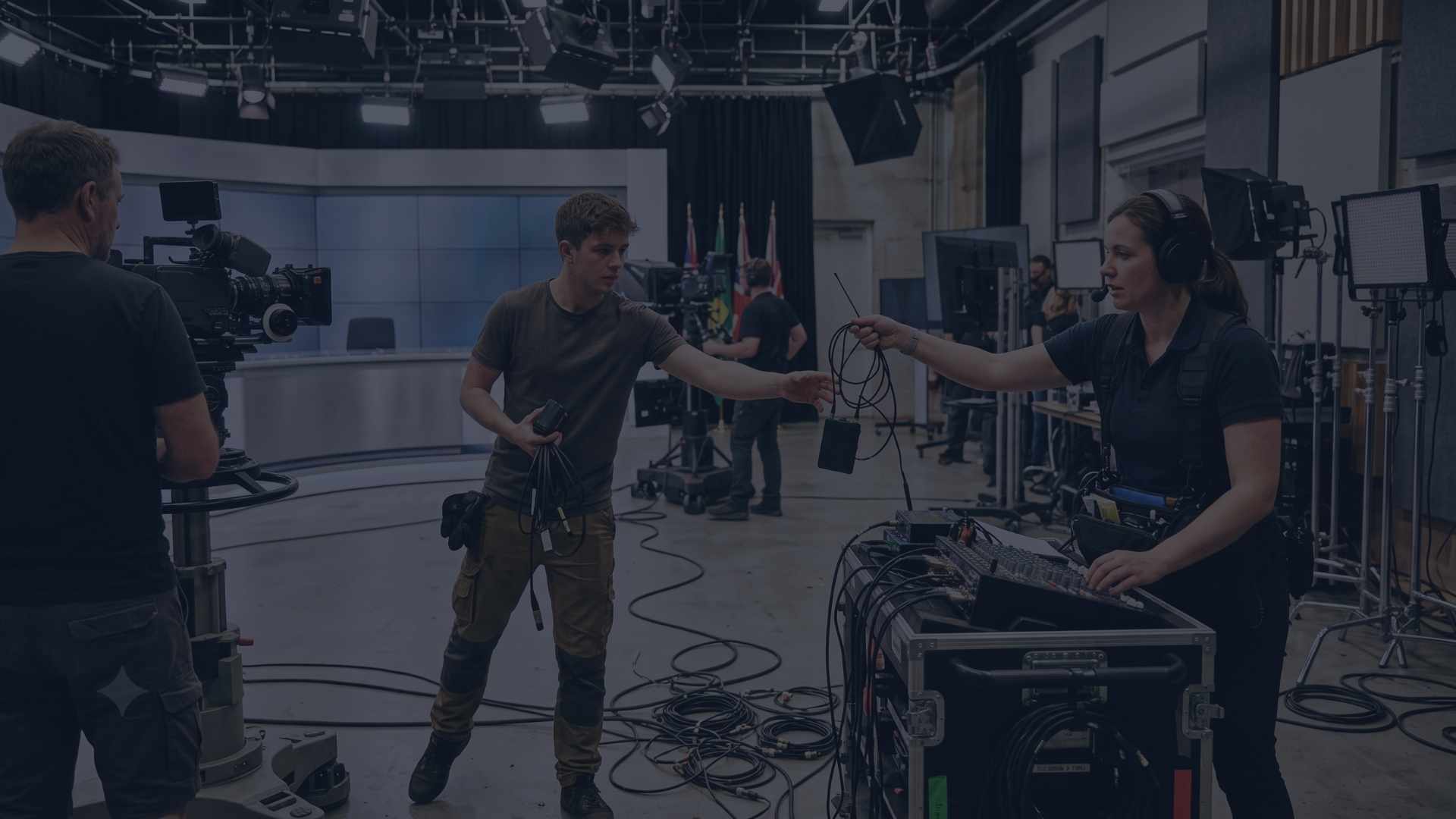
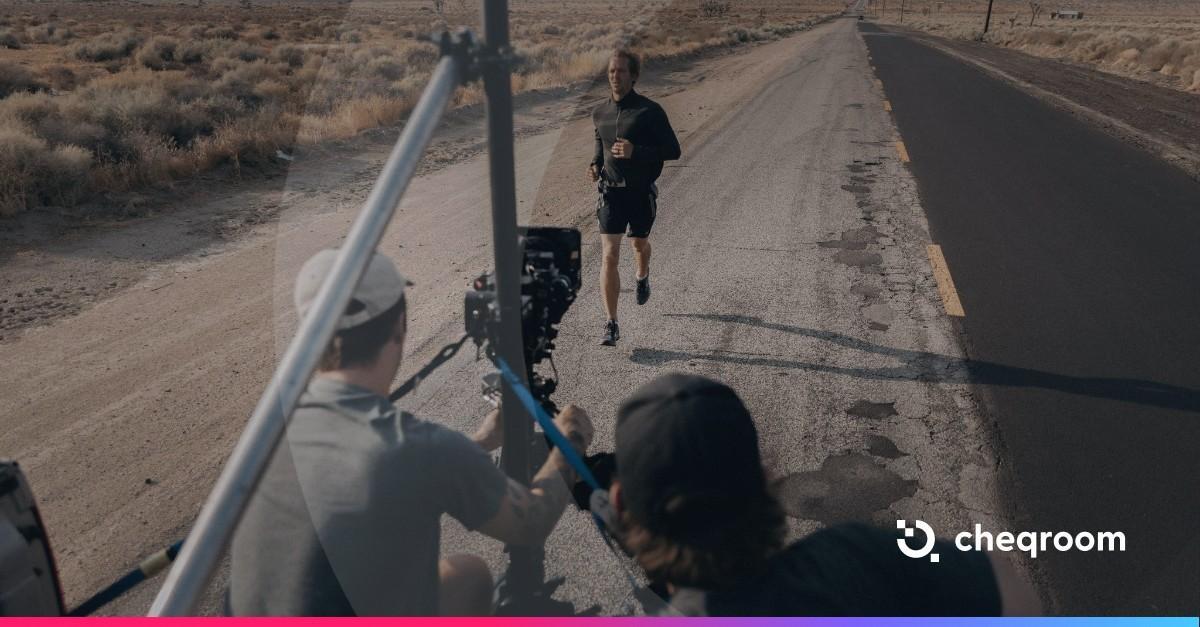
On a busy shoot day, it usually starts small. A lens gets passed between crews without a proper handoff. A wireless kit is moved to another unit and never logged. A drive comes back in the wrong case and gets checked in under the wrong record. No one notices right away.
That’s how equipment loss in production teams happens. Not in one dramatic moment, but in small gaps that build up over time.
By the time someone realizes something is missing, the trail is already cold, and figuring out what happened becomes a project of its own.
Cheqroom is the Asset Operations Platform that closes these gaps for production teams — logging every checkout, transfer, and return in one real-time record instead of waiting for someone to remember to update a spreadsheet. Cheqroom customers see a 45% reduction in equipment loss and save 80+ hours per team per month.
Why Production Environments Create Unique Equipment Loss Risks
Gear moves faster than most tracking systems can keep up with, across units, locations, crew changes, and project handoffs. Small gaps in coordination compound quickly, and in production, those gaps have a daily rate attached.
Three patterns explain most of it:
Equipment moves without a record: Informal transfers on set, verbal handoffs between units, and gear grabbed without a formal checkout all create invisible movements that the system never captures.
Returns get logged, but the condition does not: A kit that comes back short a battery or with a cracked LCD logs as a complete return. The problem surfaces three bookings later when the next crew discovers it malfunctioning on location.
The system updates when someone remembers, not when the gear moves: Under production pressure, that update gets deferred to the end of the day, or the end of the week, or never.
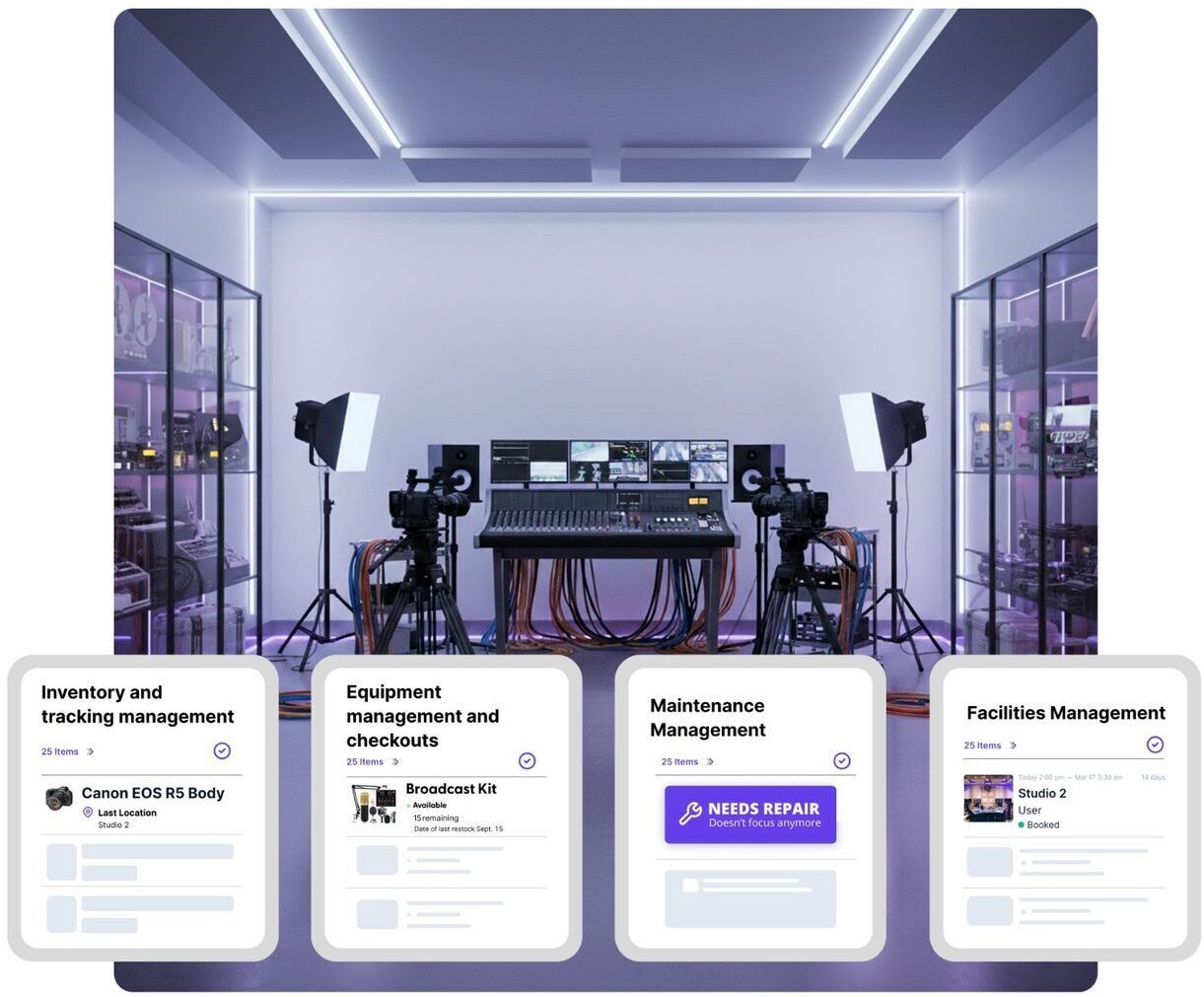
Cheqroom's AssetOps platform closes those gaps by connecting ownership, availability, condition, and scheduling into one record that updates at the point of action; not at the end of the day.
What Equipment Loss Actually Costs Production Teams
The obvious cost is replacement. A lens goes missing and gets reordered. But the replacement cost is often the smallest part of the total impact.
Shoot delays caused by missing gear are where the real cost accumulates. A missing stabilizer at call time is not a ten-minute problem. It is a reshuffled shooting order, a conversation with the director, a crew standing idle while someone drives to a rental house.
In commercial and episodic production, that idle time has a very specific hourly rate. Cheqroom research shows that 34% of teams say workflow gaps directly cause project delays. In production, that number is not a surprise. It is a Tuesday.
Duplicate purchases compound over time. Teams buy replacements for equipment that is sitting in a case somewhere in the inventory, uncatalogued and untracked. Without utilization data, equipment managers cannot distinguish between genuinely missing gear and gear that is simply not in the system correctly. Both look the same: unavailable.
Production wrap is another pressure point. When gear comes back damaged or short a component, accountability depends entirely on whether the custody trail holds. Without timestamped handoffs and condition logs at every return, establishing who had what — and in what state — becomes a reconstruction exercise. That matters for internal disputes. It matters even more when an insurance claim is involved.
💡TIP
Cheqroom can auto-generate ATA Carnets, which is critical for production teams shipping gear internationally. Every international move gets a legally binding, itemized record of what crossed the border and what came back.
Where Equipment Tracking Systems Break Down in Production
Most production teams have some form of equipment tracking. The problem is rarely that no process exists. The problem is that the process does not hold up under production conditions.
Updates Only When Someone Remembers, Not When Gear Moves
A sign-out sheet, a shared spreadsheet, a form in Google Drive: all of these depend on the person holding the gear to update the record. Under production pressure, that update gets deferred to the end of the day, or the end of the week, or indefinitely. The record and the gear diverge. The longer the divergence runs, the harder it is to reconcile.
Condition Is Not Part of the Return Process
Most basic tracking systems record whether the gear came back, not what condition it came back in. A camera returned with a cracked LCD, a lens with a fungal bloom starting, and a drive with corrupted sectors: none of these show up in a checkout log. They show up when the next crew member gets to the location, and the gear does not work. At that point, the damage is already old enough that accountability is impossible to establish.
Kit-Level Tracking Misses Component-Level Loss
Logging a kit in and out as a single unit hides what is actually happening at the component level. A kit that leaves with twelve items and returns with eleven logs as a complete return. The missing item does not surface until the next time someone opens the case to use it. By then, two or three more checkouts may have happened, and the loss is untraceable.
How Production Teams Actually Prevent Equipment Loss
Preventing equipment loss in production is not about stricter policies. Production crews already know gear should come back. The issue is that the system makes it too easy for gear to move without a record and too hard to catch it when it does.
Individual Assignment That Follows the Gear Through Every Transfer
Every person who touches a piece of gear should have a record tied to their name, not just the original checkout user, but everyone in between. When a camera moves from the main unit to a second unit operator, that transfer should get logged via scan: timestamped, user-attributed, and tied to that specific asset. An audit trail captures the full history of every checkout, return, and handoff, so the chain of accountability is continuous and complete.
MediaMonks uses this approach across its production operations.
Moving from informal gear room coordination to structured scan-based workflows gave their team visibility into exactly what was checked out, to whom, and what came back in what condition. The gear room went from a source of daily friction to a controlled operation.
Damage Flagged at Return, Not When the Next User Discovers It
Condition needs to be part of the return action, not a separate step. Damage flagged at return removes the asset from bookable inventory immediately. The account admin automatically gets notified. The lens with the cracked front element does not get packed into a kit for the next location shoot because it no longer appears as available. The problem stops at the return rather than compounding.
Maintenance Scheduling Tied to Production Calendars
Preventive maintenance needs to connect to availability. Cameras go in for sensor cleaning between projects, not mid-shoot. Steadicam rigs get serviced during post, not during principal photography. Maintenance scheduling that blocks assets during service windows and automatically restores them once cleared prevents the scenario where a piece of gear is technically in for service but still appears bookable.
What Changes When the Tracking System Actually Keeps Up
The PGA Tour's content operations team reached the point where coordinating production gear across multiple simultaneous live events on pen and paper stopped working. Missed handoffs were showing up as operational problems on the days that mattered most. Scan-based checkout and return with automated overdue notifications replaced the manual coordination entirely.
Bustle Digital Group had the same problem at a different scale. Before centralizing tracking, producers and directors of photography spent significant time each day working out which gear was available and what condition it came back in. That overhead was invisible in a spreadsheet but very visible on set.
The shift isn't more rules. It's a system where the record keeps up with the gear.
💡TIP
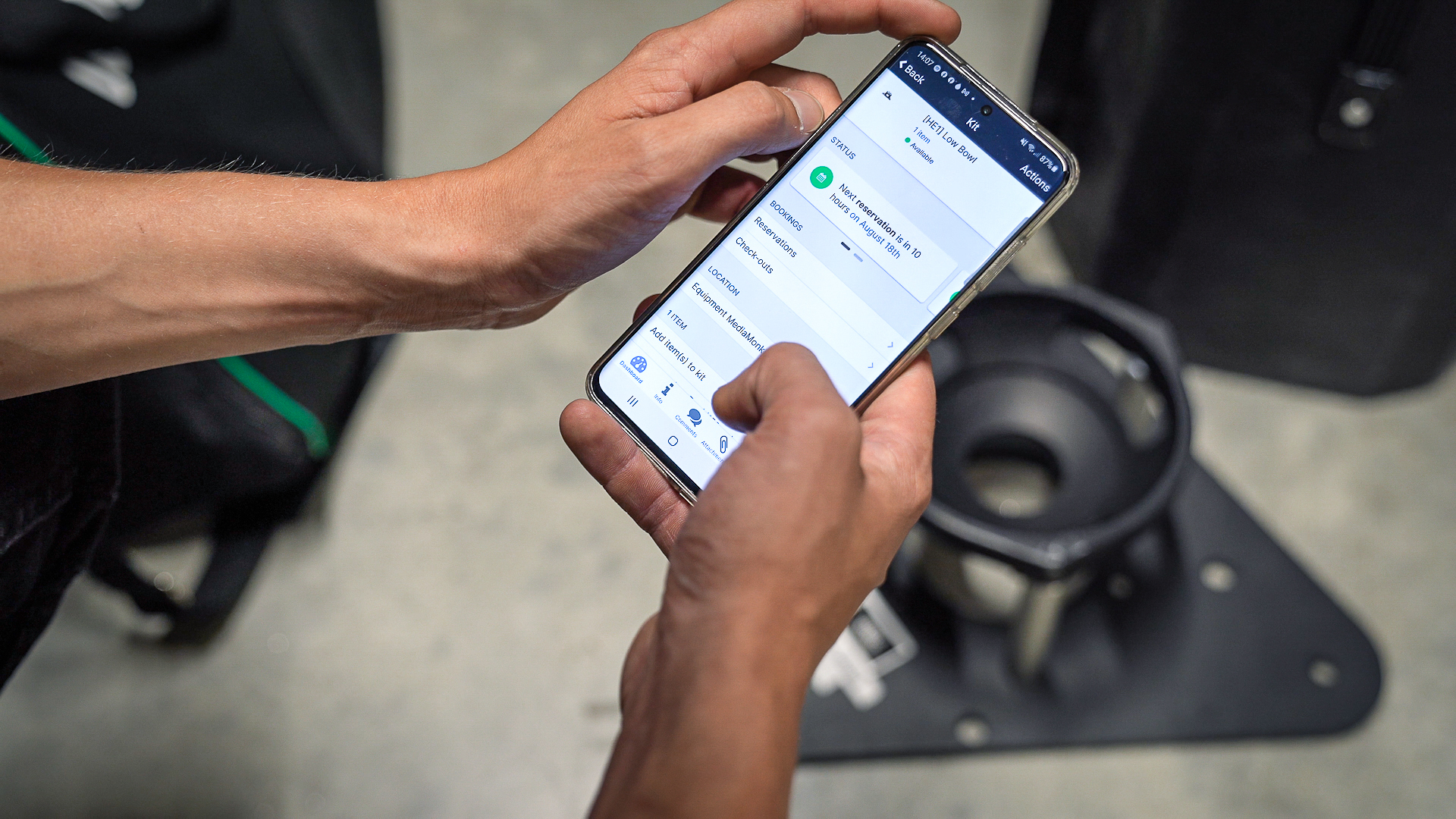
Cheqroom's mobile app puts the full workflow in the hands of whoever is touching the gear: checkout, return, condition flag, transfer. A DoP scanning out a lens before a shoot takes seconds and creates a timestamped custody record tied to their profile. No separate system to log into. No form to fill out later.
The Gear That Goes Missing Is Telling You Something About Your System
Equipment loss in production is not random. It follows the gaps in the workflow: the handoffs that were not logged, the returns that skipped condition checking, and the transfers between units that never made it into the record. Every missing item is a signal that the system lets the gear move without tracking it.
Closing those gaps does not require more discipline from your crew. It requires a system where discipline is not the variable. Checkout requires a scan. Return requires a scan. Transfers require a scan.
The condition gets logged because it is part of the same action as the return. The record stays current because the workflow makes it current, not because someone found time to update it after a long day.
Production gear does not slow down between shoots.
Meet Maria Fernanda Benitez, our Marketing Specialist driving Cheqroom’s voice and performance. Mafe blends creativity with data, shaping content, managing social media, and supporting operations while keeping a close eye on what actually works.
She has a natural instinct for trends and performance and loves turning insights into smarter decisions. Her favorite part? Brainstorming, optimizing, and making every idea count.
Why does equipment go missing in production teams?
Production gear moves faster and through more hands than almost any other shared equipment environment. Multiple units, crew changes mid-project, informal transfers on set, and compressed wrap schedules all create opportunities for gear to move without a logged handoff. Each unlogged movement is a gap in the record, and gaps are where equipment goes missing.
How does scan-based tracking prevent equipment loss on set?
Scan-based tracking prevents loss by creating a record at the point of action rather than depending on someone updating a log after the fact. A checkout scan ties the asset to a specific person with a timestamp. A return scan confirms every component is present and logs the condition. Transfers between crew members create new custody records under the new person's name. Gear cannot move through the workflow without being tracked, so there is no gap for it to slip through.
How does condition tracking prevent damaged equipment from circulating?
Condition is captured as part of the return action, not as a separate step. A damage flag raised at return removes the asset from bookable inventory immediately and notifies anyone with a future reservation. The item does not appear as available for the next booking because it no longer is. Damaged equipment stops circulating at the point where the damage is reported, rather than after it has passed through several more users.
Does Cheqroom work for multi-camera production environments?
Cheqroom is built for shared, serialized equipment that moves across multiple users, locations, and projects simultaneously. Production teams managing multi-camera setups, multiple units, and overlapping shoot schedules use it to maintain a single availability record across the full operation. See how Cheqroom supports production teams.