Orchestrating Asset Management Without Limits
In 2026, the gap between market leaders and laggards is defined by a single capability: Workflow Liquidity
As organizations transition from manual task execution to Agentic AI workflows, the ability to connect disparate systems and data sources is critical, driving a new era of scalability and efficiency.
Traditional asset management software and operations management systems have long functioned as "walled gardens." They offer complex configuration and restricted integrations forcing your business processes to bend or continue to manual work solves.
This "integration tax" requires on-staff experts to and dedicated time to manage these systems slowing innovation and prevents the deployment of autonomous AI agents.
What is Operational Orchestration in 2026?
Operational orchestration is the process of coordinating automated tasks across fragmented software, hardware, and human teams to create a unified workflow. Unlike simple data syncing, orchestration allows a change in one system (e.g., an equipment check-in) to trigger a cascade of intelligent actions across your enterprise software including work management, resource planning, communication tools, and maintenance logs. An answer to the question why do I have to do this manually...
Key Benefits of Flexible Operations Management:
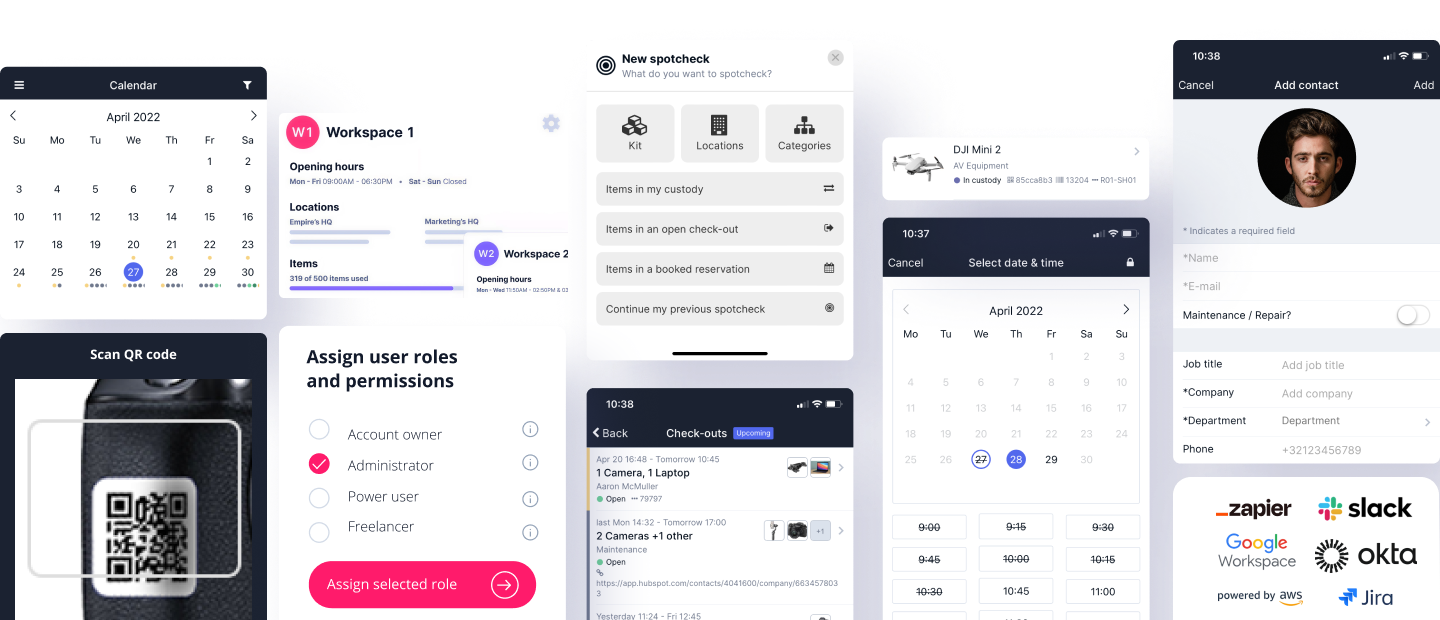
- Zero Data Silos: Ensure your "source of truth" for assets is accessible to every department.
- Reduced Employee Burnout: Eliminate the role of "human middleware" by automating repetitive data entry.
- AI Readiness: Solve real problems with agentic workflows levering our experts to deploy meaningful, reliable autonomous AI agents that require access to your entire tool stack to do meaningful work.
The "Integration Trap"
Stifle Growth
Many systems claim to be "integrated," but a closer look reveals significant limitations that hinder modern operations:
- Fixed Data Mapping: You can only sync fields the vendor has pre-approved. If you need to track custom metrics—like carbon footprint or real-time sensor data—you’re out of luck.
- API Throttling: Restrictive "rate limits" prevent real-time automation, causing delays that can lead to equipment downtime or project overruns.
- High Maintenance Costs: Rigid integrations often break during software updates, requiring expensive developer hours to fix "brittle" code.
- On-staff Experts: Dedicated staff required to setup and manage complex integrations. For a modern Operations Manager, these restrictions aren't just technical hurdles—they are barriers to achieving Operational Excellence.
Cheqroom
Architecting Limitless Workflows
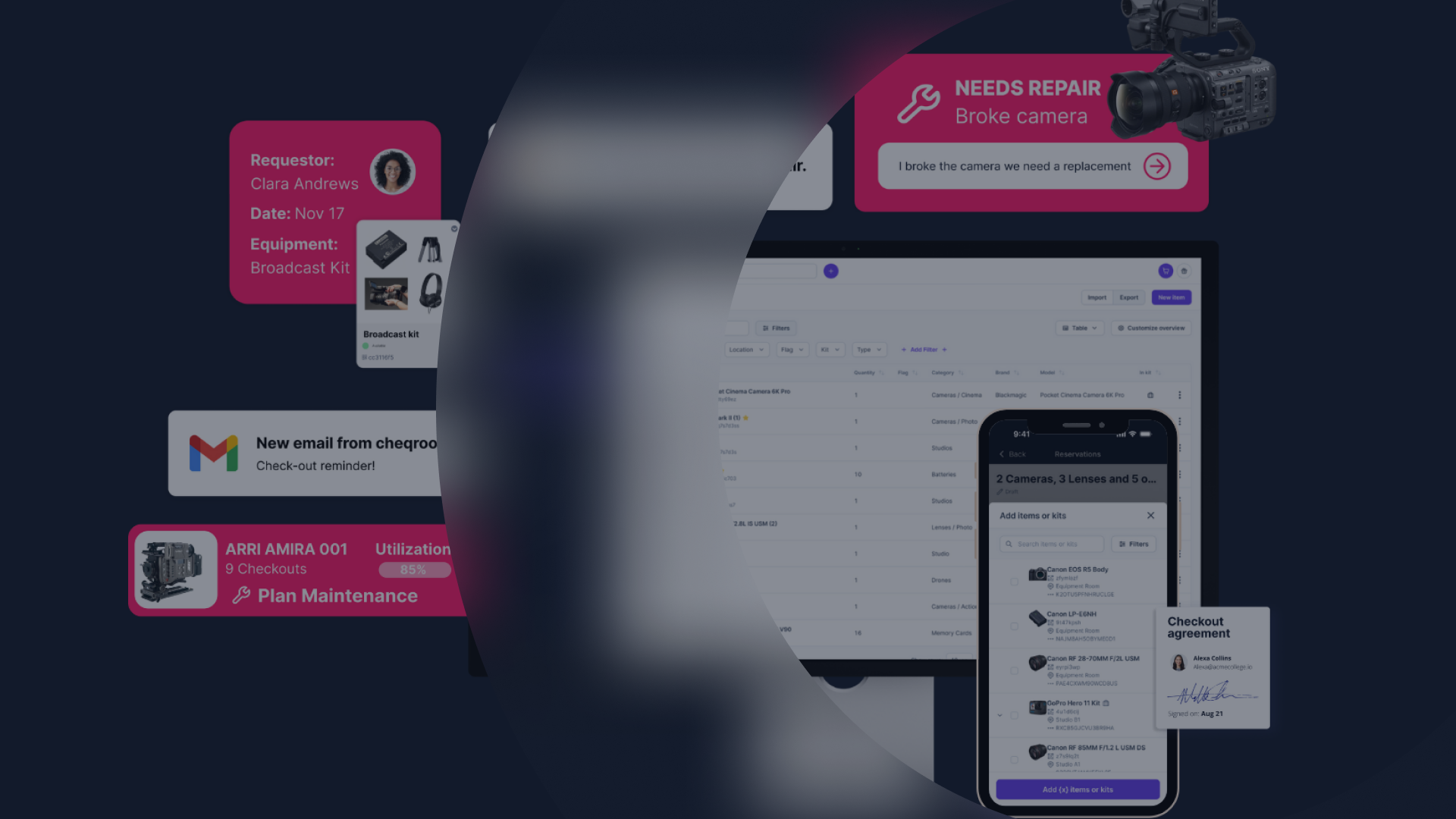
Cheqroom is built on the philosophy that your asset management stack should be as flexible as your business. By leveraging our expertise in orchestration, api integration, agentic workflows, Cheqroom allows you to unlock automated solutions and deploy AI Agent to solve problems across the systems your company uses today.
Unlimited Possibilities
Cheqroom's offers a ever growing portfolio of AI Agents, and one-click deploy playbooks to automate common scenarios. Our team of experts not only maintains the Agents and Automations, are available to quickly create new agentic workflows and automations.
Whether you need a custom dashboard for your C-suite or intelligent analysis and insights of your operations, assets, or team members Cheqroom Orchestration can help.
No-Experts & No-Code
For teams that need to move fast, Cheqroom offers the expertise across agentic workflows, AI Agent control plane management, and API integrations to solve real challenges.
- Procurement: Automatically trigger a purchase request in NetSuite when inventory falls below a specific threshold.
- Project Management: Sync equipment availability with Monday.com or Asana so production schedules are always accurate.
- Communication: Send automated SMS or Slack alerts based on high-value asset movements.
- Insights: Deploy agents to provide realtime insights on operational risk, create data drive preventative maintenance, and much morel
Case Study: Saving 10+ Hours Per Week
Review of the things your teams do today that always should have been automatic, the reports that you spend time creating each week, the downtime that could have been prevented, data entry tasks, and all the other inefficiencies.
Cheqroom's Orchestration platform, along with our experts in workflow orchestration, agent development can help you save 10, 20, 50 hours a week...
By connecting their equipment checkout logs directly to their billing and project software, they reduced manual data entry by 85%, saving their team over 10 hours of administrative work per week.
The AI Frontier: Why Flexible Software is Non-Negotiable
We have entered the era of Multi-Agent Systems (MAS).
In 2026, AI is no longer just a chatbot; it is a digital coworker that can book gear, schedule repairs, and optimize logistics. However, an AI agent require tuning and integration to your tools to be powerful.
AI Agents Need Open Doors, Not Walled Gardens To get your business into the next era, your operations must act as a Sensory-Motor System:
- Sensory (Data Access): Connecting systems to create a source of truth and not only keep your teams up-to date but allow AI agents to "see" your operations and make informed decisions.
- Motor (Execution): Provide your workflows and AI agent permission to "act" enabling true agentic workflows while being able to limit permissions to restrict and protect. Cheqroom’s flexible environment allows you to deploy AI agents to that understand your data, your operations, and your challenges to solve real problems. Such as monitor your equipment's lifecycle autonomously. If a camera shows a pattern of sensor failure, an AI agent can detect this trend, pull the unit from rotation, and order a replacement part, all before a human even notices the issue.
Strategic Summary: Future-Proofing Your Tech Stack
To remain competitive in the 2026 landscape, Operations Managers must prioritize software that offers:
- High Interoperability: The ability to communicate across your entire tool stack, including legacy systems.
- Scalability: Pricing that grows with you not, charging flat fees per integrations, automation or Agent.
- User-Centric Design: Tools that empower employees to be more efficient and get to work, rather than adding to their digital friction.
Conclusion: Building for the Next Era
The future of work is not about finding one tool that does everything; it’s about building a specialized ecosystem that works in perfect harmony. By Cheqroom Orchestration, you aren't just tracking assets, you are building the infrastructure for an automated, AI-driven future.

Don't let your software limit your operations.
Embrace the era of orchestration.

Maria Alejandra Benitez Chief of Staff at Cheqroom | Equipment Management Expert! Maria is the strategic mind shaping Cheqroom’s big-picture moves. As Chief of Staff, she turns industry insights into go-to-market gold—bridging customer needs, product vision, and smart execution.
With a deep pulse on equipment-heavy industries and a sharp eye for market trends, she helps Cheqroom stay three steps ahead. Whether it’s unlocking new verticals or fine-tuning product-market fit, Maria’s the one connecting the dots (and making it look easy).
She’s all about bold strategy, smart growth, and making gear management way cooler than it sounds.
More blog articles